


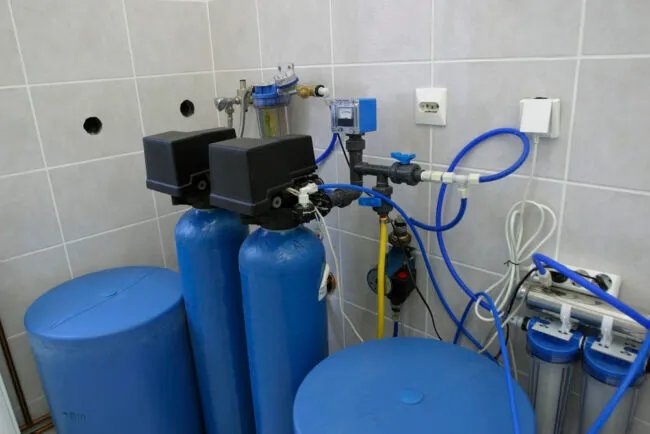
Choosing a well water filtration system for clean drinking water doesn’t have to be difficult. Once you identify the specific contaminants in your water, determine if you have hard water, and select a technology with a flow rate that fits your household plumbing setup, it’s actually relatively simple.
To make the process even easier, we researched a range of popular options to find a select few that efficiently address different water profiles while protecting against mineral buildup. Overall, the Express Water Heavy Metal Whole-House System is our top pick because it removes more than 80 common contaminants and features a robust 15-gallon-per-minute flow rate. Read on to learn more about it and the rest of our selections of the best well water filtration systems.
- Identify contaminants first. Testing your well water helps choose the right filtration system.
- Top filtration systems vary by need. Options include Express Water for heavy metals and Aquasana for hard water.
- Consider flow rate and filter longevity. Systems offer varying GPM and filter replacement timelines.
- Installation and certification matter. Some systems are DIY-friendly, while NSF certification ensures reliability.
Bottom line: Choosing the best well water filter depends on specific contaminants, flow rate needs, and installation preferences.
- BEST OVERALL: Express Water Heavy Metal Whole-House System
↓ Jump to Review - BEST BANG FOR THE BUCK: iSpring 3-Stage Whole-House Water Filtration System
↓ Jump to Review - BEST FOR HARD WATER: Aquasana Rhino Whole-House Water Filter System
↓ Jump to Review - BEST TO REMOVE IRON: AFWFilters Iron Pro 2 Water Softener Iron Filter
↓ Jump to Review - BEST TO REMOVE SEDIMENT: Home Master Whole-House Water Filtration System
↓ Jump to Review - BEST REVERSE OSMOSIS: iSpring RCC1UP-AK 7-Stage UnderSink RO System
↓ Jump to Review - BEST FAUCET: Pur Faucet Water Filtration System
↓ Jump to Review
Before You Buy a Well Water Filtration System
Before purchasing a well water filtration system, it’s a good idea to test the water so you know what contaminants, if any, are present. It also lets you know the amounts of those contaminants and if the levels are high enough to warrant filtering them out.
Water testing kits can be purchased online and can be done at home. Some are mailed to a lab for water testing, while other test kits can be completed at home. These at-home kits contain strips that change color depending on which contaminants are present. A local water company can also be hired to test the water quality. The Centers for Disease Control and Prevention (CDC) recommends testing well water annually.
Well Water Filters Comparison
| Type | Flow rate | Filter size | |
| Express Water Heavy Metal Whole-House System | 3-stage with sediment, kinetic degradation fluxion (KDF), and activated-carbon filters | 15 GPM | 23.5 inches long by 8.5 inches wide by 29.25 inches high |
| iSpring 3-Stage Whole-House Water Filtration System | 3-stage with carbon block, ion exchange, and sediment filters | 15 GPM | 21 inches long by 8 inches wide by 28 inches high |
| Aquasana Rhino Whole-House Water Filter System | Dual tank, kinetic degradation fluxion (KDF) and activated-carbon filter, salt-free water conditioner, plus pre- and post-filters | 7 GPM | 54 inches long by 9 inches wide by 46 inches high |
| AFWFilters Iron Pro 2 Water Softener Iron Filter | Resin filter | 18 GPM | 13-inch diameter, 54 inches tall |
| Home Master Whole-House Water Filtration System | 3-stage with sediment, iron, and carbon filters | 15 GPM | 24 inches long by 9 inches wide by 25 inches high |
| iSpring RCC1UP-AK 7-Stage UnderSink RO System | Reverse osmosis | 100 gallons per day | 14.5 inches long by 2.5 inches wide by 20 inches high |
| Pur Faucet Water Filtration System | Activated carbon | 0.5 GPM | 6.8 inches long by 5.2 inches wide by 2.9 inches high |
Our Top Picks
We selected the best well water filtration systems by evaluating hands-on testing results, contaminant removal, cost, certifications, efficiency, installation, and maintenance. The options below represent our top whole-house picks for clean drinking water.
Best Overall
Photo: Amazon
What We Like
- Lasts up to 1 year with regular use
- High flow rate suits medium to large homes
- Multi-stage filter removes more than 80 contaminants
What We Don’t Like
- Plumber installation adds to total cost
Product Specs
-
Type:
3-stage with sediment, kinetic degradation fluxion (KDF), and activated-carbon filters -
Flow rate:
15 GPM -
Filter size:
23.5 inches long by 8.5 inches wide by 29.25 inches high
This whole-house water filtration system uses three stages to remove more than 80 common contaminants from well water, including heavy metals, chlorine, pesticides, sediment, bacteria, iron, and organic chemicals. Stage one uses a microfiber sediment filter. Stage two uses a carbon filter to filter out lead, sulfur, iron, bacteria, and more. Stage three uses an additional carbon filter to remove pharmaceuticals, pesticides, and other organic compounds.
This system allows for a flow capacity of 0.25 gallons per second, which means 15 gallons per minute (GPM). The filter needs to be changed every 100,000 gallons, which can be every 6 to 12 months, depending on water use. This is the best overall pick for its water flow, the amount of contaminants it filters out, and its price.
Get the Express Water well water filtration system at Amazon, The Home Depot, Walmart, or Express Water.
Best Bang for the Buck
Photo: amazon.com
What We Like
- Affordable without compromising filter performance
- Compact size with easy DIY installation
- Long-lasting, easy-to-replace filters
What We Don’t Like
- No softening—won’t help with hard water
- Doesn’t remove bacteria like some systems do
Product Specs
-
Type:
3-stage with carbon block, ion exchange, and sediment filters -
Flow rate:
15 GPM -
Filter size:
21 inches long by 8 inches wide by 28 inches high
Designed to filter out heavy metals, chlorine, pesticides, iron, and sediment with a three-stage filtration process this whole-house water filtration system also uses an activated carbon filter. The filter needs to be changed every 100,000 gallons, which is approximately annually for a family of four.
This system is designed for easy DIY installation and provides up to 15 GPM of clean water flow. It is smaller than some other whole-house systems, which makes it easier to fit into out-of-the-way spaces in the house. While it’s not designed to filter out bacteria and doesn’t have a built-in water softener, this system is an affordable option for filtering out organic contaminants, iron, and sediment for clean drinking well water.
Get the iSpring well water filtration system at Amazon, Lowe’s, The Home Depot, Walmart, or Supply House.
Best for Hard Water
Photo: Amazon
What We Like
- Lasts up to 10 years with low upkeep
- Carbon filter removes 97% of chlorine
- Salt-free softener reduces limescale buildup
What We Don’t Like
- Expensive with a lower 7 GPM flow rate
Product Specs
-
Type:
Dual tank, kinetic degradation fluxion (KDF) and activated-carbon filter, salt-free water conditioner, plus pre- and post-filters -
Flow rate:
7 GPM -
Filter size:
54 inches long by 9 inches wide by 46 inches high
Aquasana’s whole-house filtration system removes pesticides, heavy metals, and chlorine from water. It has a built-in salt-free water conditioner that’s ideal for hard water. The system is designed to last for 1,000,000 gallons, or up to 10 years, whichever comes first. The filtration system uses an activated carbon filter to remove contaminants, so it is ideal for heavy metals, sediment, and organic contaminants, but not suitable for well water that’s contaminated with bacteria.
It’s recommended that the filter be changed every 3 months for optimal performance, which is more frequent than some other water filters recommend. It also provides 7 GPM of water flow, which may be suitable for some homes, but insufficient for larger households.
Get the Aquasana well water filter system at The Home Depot, Walmart, or Aquasana.
Best to Remove Iron
Photo: Aamazon
What We Like
- Preloaded resin lasts longer, flows better
- User-friendly digital interface for easy monitoring
- DIY-friendly installation with simple setup
- Built-in softener ideal for hard water areas
What We Don’t Like
- Loses settings during power outages—may need resets
Product Specs
-
Type:
Resin filter -
Flow rate:
18 GPM -
Filter size:
13-inch diameter, 54 inches tall
This combination of water softener and iron filter works for the whole house and removes iron up to 8 parts per million (ppm). It removes manganese, sediment (including sand), and rust, and can take the sulfur smell out of drinking water.
The built-in water softener feature can be ideal for homes with both hard water and high amounts of iron in their well water. It uses a resin filter that lasts longer than carbon filters and provides better water flow. It also has a digital interface that indicates when it’s time to refill the salt. This system is designed for easy DIY installation to provide safe water.
Get the AFWFilters well water filtration system at Amazon, Walmart, or AFWFilters.
Best to Remove Sediment
Photo: Amazon
What We Like
- Compact size fits well in small spaces
- Filter lasts 95,000 gallons or one year
- Easy install for confident DIYers
- More affordable than most comparable systems
What We Don’t Like
- No softener—less ideal for hard water
Product Specs
-
Type:
3-stage with sediment, iron, and carbon filters -
Flow rate:
15 GPM -
Filter size:
24 inches long by 9 inches wide by 25 inches high
This system removes up to 95 percent of iron, manganese, sediment, and other contaminants from well water with a three-stage filtration system. With 15 GPM, this system uses a carbon filter to keep contaminants out of water. Featuring a multi-gradient density sediment filter, which physically blocks particles of sediment from entering water, this system can filter out finer particles of sediment. It’s conveniently sized and can be installed as a DIY project or with professional assistance.
The filter needs to be replaced every 95,000 gallons, which is about every year for a family of four. However, it isn’t designed to remove bacteria or chlorine from water, and it doesn’t have a built-in water softener.
Get the Home Master well water filtration system at Amazon, The Home Depot, or The Perfect Water.
Best Reverse Osmosis
Photo: Amazon
What We Like
- 7-stage system removes bacteria and adds minerals
- Delivers 100+ gallons daily—great for families
- Includes rust-resistant brushed-nickel kitchen faucet
- Straightforward install with included instructions
What We Don’t Like
- Replacement filter packs are relatively pricey
Product Specs
-
Type:
Reverse osmosis -
Flow rate:
100 gallons per day -
Filter size:
14.5 inches long by 2.5 inches wide by 20 inches high
Reverse osmosis systems are very effective at cleaning all of the contaminants from well water, and this model from iSpring is one of the most trusted options on the market. This 7-stage well water filtration system includes a reverse osmosis membrane and UV stage for removing bacteria and an alkaline filter that provides healthy minerals while improving taste. It is also ideal for households of two to four people with its 100-gallon-per-day flow rate and booster pump.
This system also includes a brushed-nickel kitchen faucet with a rust-free finish and ceramic valve for longevity. Many users have also reported that this unit was easy to install and came with easy-to-read instructions. Plus, the included filters will not need to be replaced for one year. The only downside we found to this option is that replacement filters may be expensive.
Get the iSpring well water filtration system at Amazon, Lowe’s, or The Home Depot.
Best Faucet
Photo: Amazon
What We Like
- Removes 70 contaminants including lead and pesticides
- Compact, lightweight—great for home or travel
- Built-in lever and filter light for ease
What We Don’t Like
- Filters last just 3 months per use
- Flow rate slower than expected during testing
Product Specs
-
Type:
Activated carbon -
Flow rate:
0.5 GPM -
Filter size:
6.8 inches long by 5.2 inches wide by 2.9 inches high
Those who prefer a compact option that can be easily attached to most current faucets can rely on this faucet water filter from Pur. It removes over 70 contaminants, including lead, mercury, and agricultural pesticides, with the help of its activated carbon filter and ion exchange. The activated carbon filter lasts for over 100 gallons of clean water and has a 0.5 GPM flow rate, meaning that it will last for over 3 months with regular use.
This plastic faucet is also lightweight at just 1.15 pounds, which makes it portable enough to bring when traveling or RVing. It also has a filter change light and an on/off lever built in to switch between filtered nonfiltered water. The only downside to this option is that our testers found the flow rate to be slower than they had expected.
What our tester says: “This unit delivered some of the best-tasting water among all of the tested models. At 59 pounds per square inch water pressure, it took 53 seconds to fill a quart-size water bottle, but the wait could be worth it for those dealing with contaminated water. The filter cartridge was super easy to change, too.”—Mark Wolfe, Product Reviews tester and writer
Get the Pur well water filtration system at Amazon.
How We Chose the Best Well Water Filtration Systems
While conducting hands-on testing and gathering our list of recommendations, we considered the most common issues with well water that homeowners deal with, then researched our top picks for a variety of categories. Our list contains the best options for shoppers looking to eliminate bacteria, iron, sediment, and hardness from their water, as well as comprehensive three-stage filtration systems capable of tackling all issues in a single unit.
One vital aspect of a good filtration system is flow rate, so we made sure that all our recommendations provided adequate flow rates of a minimum 7 gallons per minute to prevent slow-running water. Equally as important was filter longevity, since no one wants to be replacing filters every month. As such, our top picks all use high-quality filters that last anywhere from 3 months to an entire year. Some picks even have components that should last an impressive 10 years.
What to Consider When Choosing a Well Water Filtration System
When looking for the best well water filtration system, it’s important to take into account a few factors, including what contaminants the system will filter out, filter size, flow rate, and filter type. Evaluating these factors will help you choose the right water filtration system for a home.
Water Contaminants
Different filtration systems filter out different contaminants for clean drinking water. Some filtration systems are designed to filter out heavy metals, while others are better for filtering out bacteria. This is why it’s so important to find out what contaminants you’re dealing with before investing in a well water filtration system for your home.
Common contaminants in well water include the following:
- Microorganisms. Bacteria in well water, such as coliform bacteria and E. coli, are common. Most exist at levels that aren’t harmful, but some homes have higher levels that will benefit from filtration, as higher levels of bacteria can lead to disease and even death.
- Nitrate. Nitrate can naturally contaminate well water and doesn’t normally pose an issue, but high levels can be a concern. Consuming too much nitrate can cause headaches, nausea, and even an increased risk of cancer.
- Heavy metals. These can include copper, lead, cadmium, arsenic, and chromium. While trace amounts of these metals are generally not harmful, significant amounts of heavy metals can pose health threats, such as an increased risk of cancer, especially if consumed over time.
- Organic chemicals. Substances can include pesticides, pharmaceuticals, paints, dyes, and disinfectants that can contaminate well water. Organic chemicals such as these can cause liver and kidney damage as well as damage to the nervous and reproductive systems.
- Fluoride. Fluoride is often added to public drinking water supplies to help prevent tooth decay, but fluoride also can contaminate well water, and high amounts of fluoride can have adverse health effects, such as nausea, vomiting, seizures, and skeletal fluorosis.
- Iron. Iron plumbing pipes can contaminate water as it enters the house, but iron can also come naturally from the ground. Like many contaminants, low levels are generally not harmful, but high levels are of concern and can cause organ damage, acne, fatigue, and joint pain.
- Sediment. These are particles such as sand and dirt that naturally occur in well water, but removing them is important to ensure water is clean and to minimize wear on appliances.
- Sulfur. While too much sulfur, in and of itself, isn’t necessarily bad in drinking water, many detest the smell of sulfur, which can have a rotten-egg odor.
Filter Type
There are different types of water filters that whole-house filtration systems use for well water. These include activated carbon, resin, reverse osmosis, water ionizers, UV filters, and infrared filters.
- Activated carbon. Carbon filters essentially absorb contaminants, preventing them from passing through the filter. These are best for removing pesticides and lead but can remove iron and bacteria as well. Coconut shell is a common material used in activated carbon fiber filters.
- Resin. Resin filters work well for removing iron and tend to last longer than other types of filters while providing adequate water flow.
- Reverse osmosis. Using pressure and a semipermeable membrane, reverse osmosis can remove heavy metals and fluoride, but it’s not the best system for removing pesticides and organic contaminants.
- Water ionizer. Water ionizers use an electrical charge to filter water and can filter out heavy metals and pesticides. Be sure to confirm what contaminants a specific brand can filter out to be sure it’s the right choice for the water.
- UV filters. Using an ultraviolet (UV) light, these filters are best for killing bacteria, but they don’t remove other drinking water contaminants.
- Infrared filters. These filters use light and heat to soften water, which is useful for homes with hard water. Although it can kill bacteria, it’s not ideal for removing other contaminants.
Some systems also allow the use of multiple filters to filter out contaminants. For example, if there is bacteria in the water, a UV filter can help. If there are also other contaminants, such as organic chemicals or lead, an added activated carbon filter would work. Filters can also use a series of stages to filter out contaminants for clean drinking water. For example, stage one will filter out sediment, while stage four will filter out organic chemicals. Many systems can add UV light to the system to kill bacteria.
Filter Size
Different water filtration systems have different filter sizes. The size affects where the system can fit in a home, such as under the sink, as well as how much water it can filter at a time.
Some systems are more than 50 inches tall, while others are less than 30 inches tall. The filter size also determines how many gallons of water it can purify before the filter needs to be changed. Some manufacturers also specify a time limit for changing the filter.
As a general rule, water filters will need to be changed every few months. Some will need to be changed every 3 months, while others are fine to be changed every 9 months or a year. It depends on the type of filter as well as how much water it filters and the amount of contaminants that need to be removed.
Flow Rate
A water filtration system will also have a certain flow rate, meaning the amount of water the system can filter that is ready to be used at any given time. This measurement is typically given in gallons per minute (GPM).
Some whole-house filtration systems have 7 GPM, while others go up to 15 or 20 GPM. A home may require a certain flow rate, so this is worth checking into when looking for the best well water filtration system. The home’s flow rate can be checked by collecting and measuring water from a given faucet in a home. Collect full-pressure water from a fixture for 10 seconds in a bucket, and then multiply the number of gallons collected by six to find the fixture’s gallons per minute.
The average home requires a flow rate of 6 to 12 GPM, depending on the size of the home and how many people live there. However, it also can depend on personal preference, based on how fast water needs to be available from the filtration system.
Built-In Water Softener
Some whole-house water filtration systems have a built-in water softener. This is ideal for homes that have hard water. Hard water is water that has a high mineral content, especially calcium and magnesium, which can damage appliances and water pipes over time.
Filtration systems can use either a salt-based or salt-free mechanism to soften water. Well water filtration systems that have a built-in water softener typically use salt-free methods of conditioning the water. They don’t actually demineralize the water, but they do “soften” it to prevent mineral buildup.
NSF Certification
NSF certification on a water filtration product means that the product’s claims have been verified to do what the company claims they do. For example, if an NSF-certified water filtration system says it removes iron down to three parts per million, there is trust that the product will do that.
Not every filtration system will be NSF-certified. NSF-certified products are also made from components that will not leach more contaminants into the water, such as plastic made with bisphenol A (BPA), a synthetic chemical that’s been linked to hormone disruption in humans.
Installation
Some whole-house filtration systems are easier to install than others. While some systems are easy enough to install yourself, others will require professional assistance. Some filtration systems have an installation kit to make installation easier. Other systems will recommend that a professional install the filtration system if you’re not familiar with plumbing.
Although ease of installation is certainly a factor to consider when looking for the best well water filtration system, it may not be the sole deciding factor. After all, ensuring the system can filter out the water’s specific contaminants is more important than the installation process.
FAQs
Now that you know more about water filtration systems for well water, there may be new or lingering questions. Below are answers to some popular questions about how well water filtration systems work and how to choose the best whole-house water filter.
No, not all water filters remove hard water. Some water filters come with a built-in water-softening system that will condition hard water.
If you get a system that fits your GPM needs, it should not reduce water pressure.
Begin by testing the water to see what contaminants need to be filtered out. Then, determine the home’s GPM needs and if a water softener is needed to counter the effects of hard water.
Each system will have specific maintenance needs, but generally, it will require changing the filter or UV light at regular intervals.

The Latest (and Greatest) Deals
