


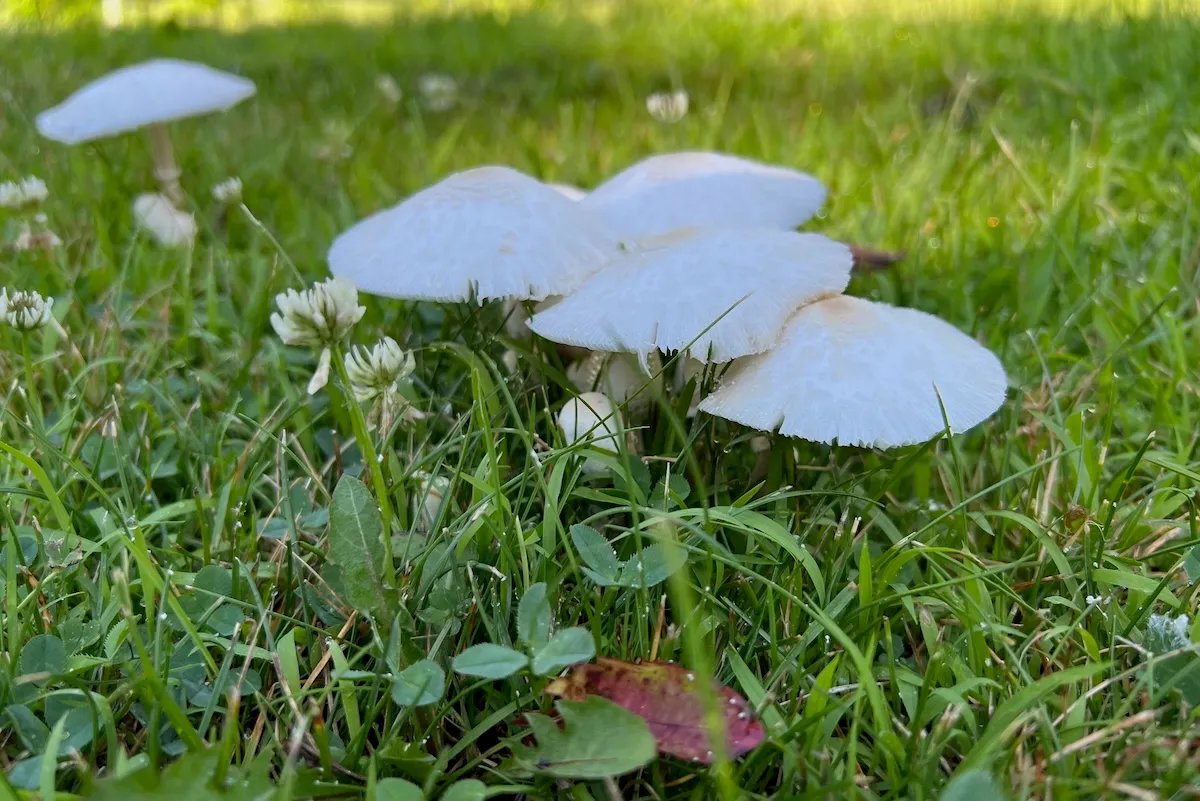
Lawn mushrooms are fairly common, particularly in locations with high moisture and low light. Fortunately, the mushrooms growing in your yard are usually harmless, and can sometimes even be beneficial.
Mushrooms are signs of lawn fungi that can break down organic material in the lawn, deposit nutrients into the soil, and help soil retain water with their pervasive root systems.
But if you don’t like the looks of the fungi or if you have children or pets who you think may nibble the mushrooms are easily managed. Doing nothing at all and leaving them be is an option too.
Nobody makes lawn care easier.
Leave it to the pros at TruGreen. Sign up today to get 50% off your first service—and your weekends back.
GET A QUOTE
Are lawn mushrooms a good or bad thing?
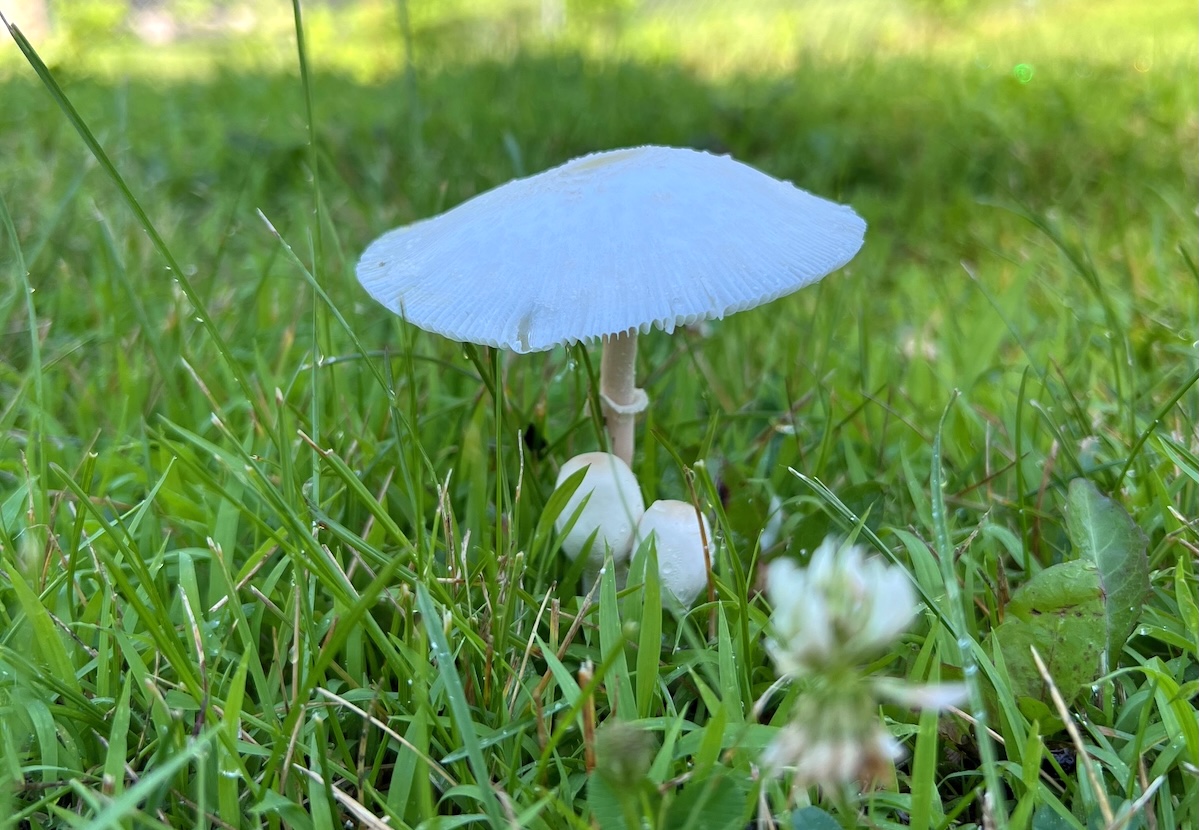
Sudden appearance of mushrooms on a lawn might seem problematic, but that is not usually the case. “Fortunately, mushrooms can’t do anything bad to your lawn. They may only disrupt the perfect look of the grass,” says Bryan McKenzie, landscape designer and co-founder of Bumper Crop Times.
In other words, don’t panic if you see mushrooms arise on their own. Consider why they grew, then decide whether you need to get rid of them or just let them be.
Why do mushrooms grow in my grass?
Mushrooms are the fruits of the fungus world. Just like flower seeds, mushrooms serve to reproduce a fungus and ensure its survival. Instead of spreading seeds, fungi have microscopic spores on their gills and under the cap that either blow with the wind or travel with critters who eat them. Researchers have found that mushrooms can even create their own “wind” or airflow to ensure the spores scatter and then germinate in new soil.
Soils already contain plenty of fungi, and the fungi help cause organic matter to decompose. So, in the lawn ecosystem, leaves or grass clippings fall on the yard, and offer carbon and other nutrients to fungi. The fungi return the favor by helping turn the clippings and leaves into soil nutrients.
“Mushrooms are actually a good sign that your lawn’s soil is healthy,” says David Cusick, executive editor of House Method. Since the mushrooms crop up from fungi, the good news is that fungi are working beneath the surface. Appearance of mushrooms can signal excess moisture (from overwatering, for example), Cusick adds.
Browning grass in dark circles or bands might appear before mushrooms, and is a natural part of the soil process. The patterns might be followed by half-circles of white mushrooms or puffy balls; the circles often are called “fairy rings.”
Potential Downsides of Lawn Mushrooms
Although mostly harmless, there are a few drawbacks to having mushrooms in the lawn. Their presence might signal some problems as well:
- The puffs and mushrooms can look unsightly in an otherwise pristine lawn
- A few lawn mushroom species are toxic, and kids or dogs might eat them, leading to (sometimes severe) stomach upset
- Continued fungi growth above the soil can damage localized areas of grass
- Mushrooms can signal overwatering of the lawn, which means wasting water, too.
How to Get Rid of Mushrooms in Your Yard
If your lawn mushroom issue is really trying your patience, tackle the issue like you would address a pest problem, beginning with integrated management. Good lawn-care practices like dethatching and changes to timing or amount of water can prevent large outbreaks. Or you might choose to remove the yard mushrooms.
Reduce excessive moisture and shade in your lawn.
Fungus grows naturally beneath the grass more often than you see mushrooms; those toadstools don’t become visible among blades of grass until conditions are damp and dark. To make your yard less attractive to them, first improve drainage by aerating your lawn. Doing so will allow better air circulation and drainage.
Best Manual Lawn Aerator
Yard Butler Manual Lawn Coring Aerator
The Yard Butler has padded handles and is just 3.5 pounds and 37 inches high, making it a comfortable size for most users. Read the review.
See It
Photo: Amazon
Adjusting your usual lawn care routine can also keep your grass drier. Water less frequently (only 1 inch of water per week) and mow more regularly, since short grass dries out more quickly than long grass. If you get fairy rings or mushrooms in your lawn and you water at night, switch the schedule to water the grass in early morning, giving it time to dry out before cool, dark evenings set in.
Still see mushrooms cropping up in a shady corner of your property? Trim and/or thin nearby tree branches so that more light can reach the lawn, thus making the environment less hospitable for mushroom growth.

Tried-and-True Advice
“When I first moved to the Midwest I was not used to living somewhere with a lot of summer rain. It didn’t take long before I saw mushrooms growing, especially in one specific area of my lawn. It wasn’t a shady area, so I was puzzled why there were consistently mushrooms there until it dawned on me that I was watering my lawn too often. I was used to a dryer climate and hadn’t adjusted my process. My mindset had been: it’s going to be hot today, I should water the lawn but I wasn’t accounting for the rain and humidity.
I cut back on watering to once or twice a week, depending on rainfall. I also used a hand aerator to aerate that section of the lawn, which helped to improve the drainage and cut back on pooling water. I no longer have a fungi farm in that part of my yard.”
—Amber Guetebier, Contributing Writer
Clear out some organic material.
Fungi feed on decomposing organic matter, such as dead tree roots to grass clippings. Discourage it from sticking around after you’ve removed the spore-bearing mushrooms by reducing their food source. Start by catching grass clippings when mowing (or leaving just a thin layer of them). Periodically dethatch your lawn in the areas where you see mushrooms.
If the fungi are feeding on organic material submerged in the soil—like dead tree roots, old mulch, or wood that was discarded during home construction—you’ll need to dig that out as well to stop the constant appearance of mushrooms. Your best shot at a complete removal is to dig the soil out beyond the affected area, 12 to 18 inches deep and about 2 feet outside of the mushroom cluster.
If you think it’s more work than it’s worth, not to worry: Once the fungi have devoured all of that submerged organic material, the fungi, and the mushrooms, should disappear for good.
Remove each mushroom at its base.
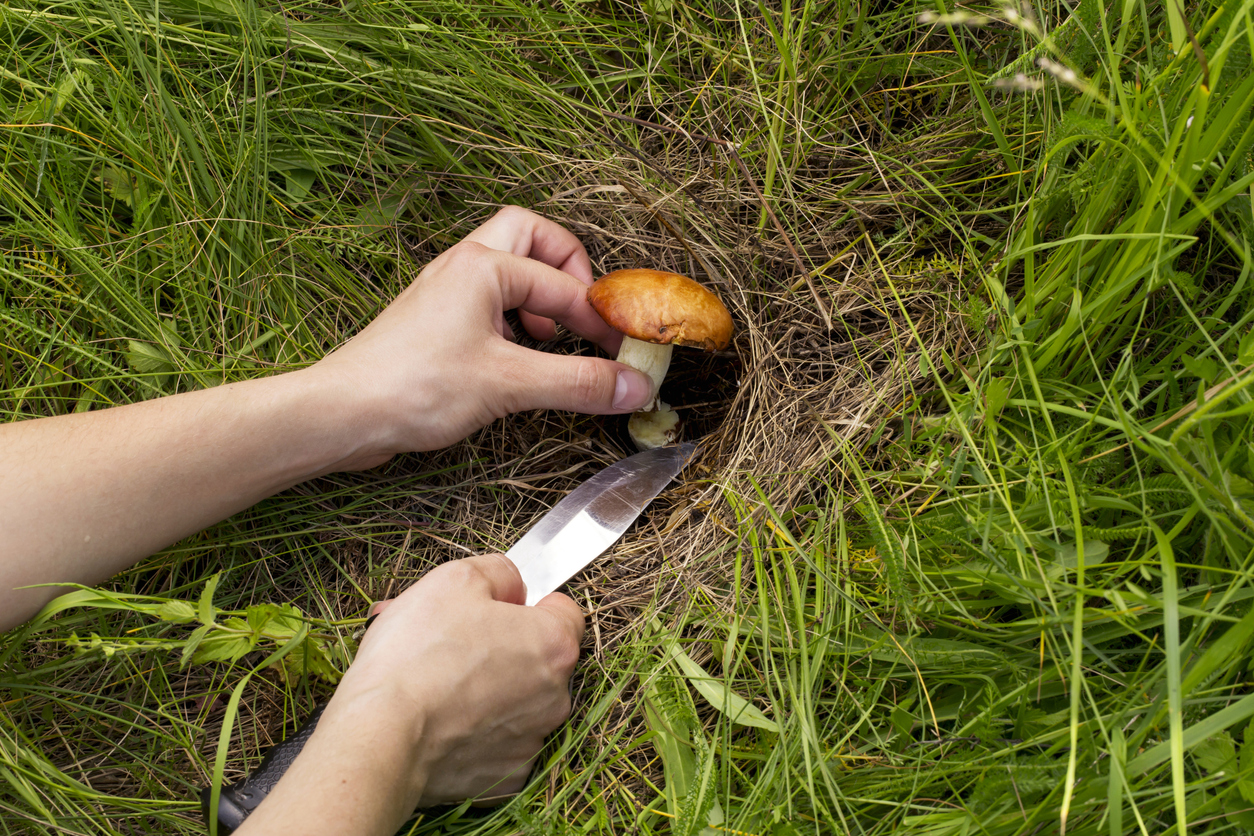
You can pull mushrooms individually by hand, cut each with a knife, or simply mow over the entire area with the lawnmower. If pervasive, be sure to remove yard mushrooms as soon as you see them sprout. Otherwise, they’ll have just enough time to release spores to plant and grow new mushrooms.
For the same reason, don’t dispose of them in your compost. Instead, throw them into a plastic bag and tie it tightly before discarding it in the trash. If you choose to mow mushrooms over, pick the pieces up and discard them into a bag immediately.
Chemical fungicides are not necessary, and might kill beneficial soil agents, says Cusick. If you want to get rid of yard mushrooms for lawn appearance and the kids’ sake, McKenzie suggests a simple homemade fungicide of 5 tablespoons of vinegar per gallon of water mixed and poured into a sprayer. “Before applying the remedy, cut down all the mushrooms and spray their place of growth,” he says.
Why You Might Allow Mushrooms to Grow in Your Yard
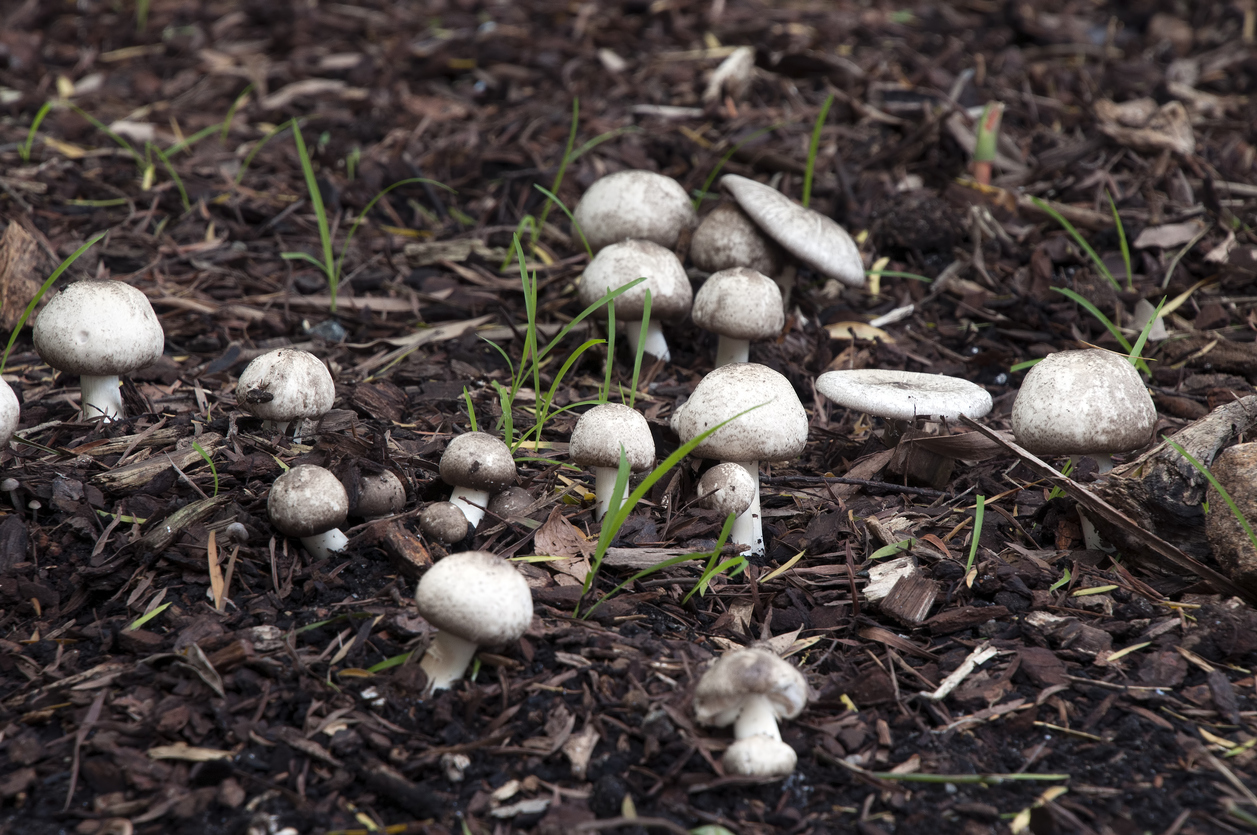
Aside from appearance, most lawn mushrooms are harmless. You can allow the mushrooms to stay, especially since completely ridding the lawn of them might require steps that do more harm than good for your lawn’s soil.
Lawn mushrooms are a sign of healthy soil.
About 50 species of fungi can form fairy rings or cause mushrooms to sprout in turf. They might crop up because of cool, wet evenings in the weather pattern that cause the soil to stay wet and produce perfect fungus growing conditions. But those fungi—and the mushrooms that fruit to spread spores—signal lots of healthy activity beneath the soil.
According to the Natural Resources Conservation Service, fungi help roots access water, cycle nutrients, and improve the soil’s structure. They’re an integral part of the soil ecosystem—and you can’t have a lush lawn without good soil beneath.
Mushrooms provide your lawn with nutrients.
Celebrate fungi as an integral part of the soil ecosystem and plant nutrition. Mushrooms grow in the yard when conditions are right, but the fungi live beneath the soil year-round. A twisting group of filaments that look like roots (called hyphae) do the underground work.
In natural environments, plants take up nutrients from the soil and through their roots. The plants store the nutrients in leaves, flowers, and other areas. If an animal eats part of the plant, the nutrients pass on to the animal. Animals and insects that die pass the nutrients back into the soil, where they get broken down by earthworms, fungi, bacteria, and other helpers.
Hyphae help break down organic matter into the elements plants need, including carbon dioxide, and nutrients such as phosphorus, nitrogen, potassium, and other macronutrients, plus micronutrients. Mushrooms spread fungal spores and help keep this process going!
Final Thoughts
Instead of panicking when you see mushrooms in the lawn, take a beat. It doesn’t hurt to rake them up or pick them if you don’t like how they mar your pristine green turf, but there’s no need to throw chemicals at the problem.
Adjust watering, or rest assured that if nighttime rains have been higher than normal in a particular summer, the mushrooms will go away when the weather changes. Embrace these capped “seeds” of fungi as essential contributors to your lawn’s health.
FAQ
Absolutely! However, if you see signs of fairy rings and poor turf health, mushrooms might signal a problem such as overwatering or watering too much in cool evenings. Considering the mushrooms represent fungal reproduction, their presence really is a great sign of healthy soil.
The best way to prevent mushroom growth is to avoid overwatering grass. Another step you can take is to water early in the day, so the lawn does not sit damp through the evening. If mushrooms are pervasive, consider removing them by hand. Avoid using fungicides if at all possible.
Although few mushrooms are toxic, it is best not to take a chance with pets and kids. White mushrooms, in particular, might appeal to kids because they look familiar. If you are concerned, remember toadstools crop up only in the right conditions. Don’t panic and pour fungicides on the lawn. They can kill beneficial fungi.
The best way to ensure no lawn damage is to hand-pick the mushrooms, which really only serve to spread fungal spores. Those fungi are essential to grass health, and you are more likely to have a healthy lawn if you have healthy fungi, which are underground workhorses for soil health.
Grass inside fairy rings and heavy spots of fungi can die, but treating the area with a nitrogen fertilizer can mask symptoms, and deeply aerating the soil will improve health of the grass above it.
Some lawn mushrooms are edible, but be sure to check a foraging field guide or with a local cooperative extension office before assuming any yard mushroom is safe to eat. If toxic, the mushrooms can cause symptoms ranging from mild stomach upset to organ damage days after you eat them.
All You Need to Care for Your Lawn & Garden
