


Urgent action is needed to tackle the “maldistribution” of nurses between hospital and community settings, according to the leader of an organisation representing nursing bodies around the world.
Howard Catton, chief executive of the International Council of Nurses, highlighted that there were between global health policy ambitions and community nursing “realities”.
“It is time to structurally empower the nursing workforce to enable their full impact”
Howard Catton
He also said nurses needed to be empowered as the “backbone” of the preventive, person-centred and primary healthcare that the world needs to achieve its wider global health ambitions.
His comments chime with two of the three ‘big shifts’ identified in the UK government’s 10 Year Health Plan for England, namely moving from treatment to prevention and hospital to community.
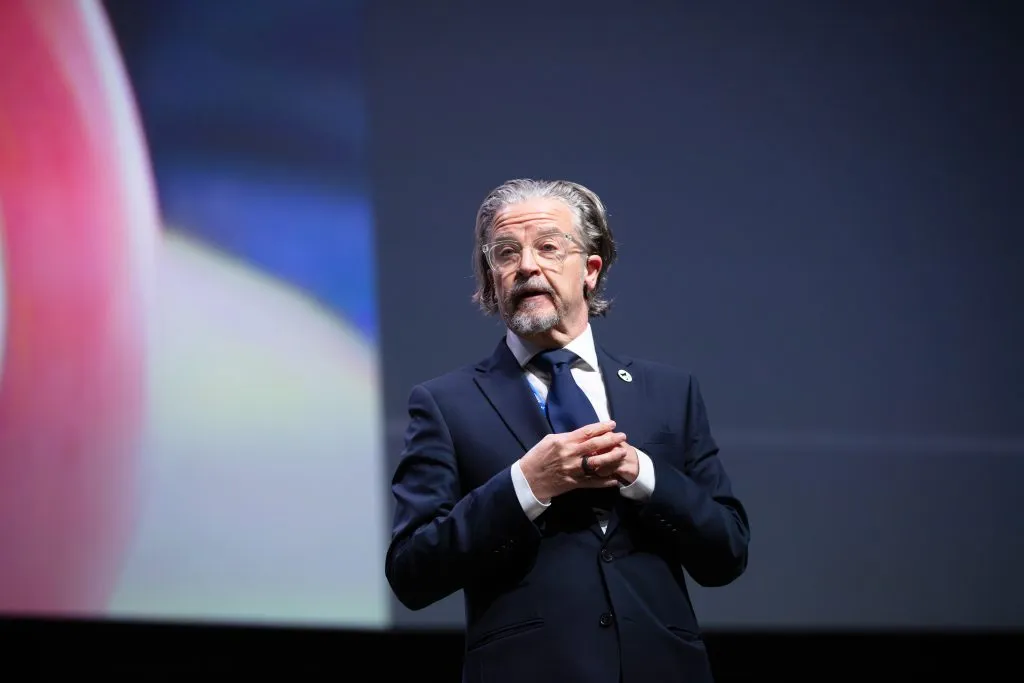
Mr Catton was speaking during a conference of the International Home Care Nurses Organization in London last week, attended by a global audience of nurses, educators, leaders and researchers.
Drawing on the World Health Organization’s (WHO) 2025 State of the World’s Nursing report, he said the global nursing shortage of 5.8 million was compounded by overlooked inequities in distribution.
“The issue is not only how many nurses the world has, but also where they are,” said Mr Catton, who’s organisation is a global federation comprised of over 140 national nurse associations.
“We often discuss unequal concentrations of nurses in high-resource versus low-resource regions and urban versus rural areas, but there is another major imbalance that deserves our attention,” he said.
“Nursing workforces remain concentrated in hospital settings – in many countries at least 60-65% – with too few in the communities, homes and clinics that are the foundation of primary health care.”
Mr Catton used the health service in England as an example, referencing “worrying data” that suggested just 12% of NHS nurses were in dedicated community services.
At the same time, he highlighted that important community nursing workforces, like district nurses, health visitors and school nurses, were shrinking in England.
“These global patterns represent a serious misalignment with the direction set by health policy,” he said, citing the WHO report’s call for systems to be reoriented toward primary and community care.
He contrasted outdated and nostalgic stereotypes of community nursing, such as the district nurse cycling through the English countryside, with the complex, multidimensional reality of the role today.
Mr Catton said: “Today’s community nurses administer chemotherapy and manage complex drug regimes in patients’ homes.
“They are responsible for vascular access lines and devices, oversee specialised wound management and support end of life care in the place that the overwhelming majority of people would want to spend their remaining days. Much of this care would previously have required a hospital admission.
“In addition, they navigate the intricate clinical and social needs of people living with multiple long-term conditions,” he said.
“And critically, they are the coordinators of care, the professionals who hold the whole picture of a patient’s health and connect them across services, and who provide health education and preventive care for entire communities.
“This is highly skilled, clinically complex nursing and leadership, which should be recognised, valued and resourced,” he told delegates at the conference.
He added: “Nurses, as both the largest group of health professions with unrivalled reach deep into our communities, are the key to ensuring that no one is left behind.
“It is time to structurally empower the nursing workforce to enable their full impact, which must include action to correct the persistent imbalance of nurses between hospital and community and primary healthcare settings.”
Mr Catton said systemic change was needed to build and sustain the community nursing workforce, including embedding meaningful community placements within undergraduate nurse education.
He also called for the creation of “clear career pathways” that allowed nurses to enter community-based roles at the beginning of their careers, and pay that better reflected the complexity of such roles.
