


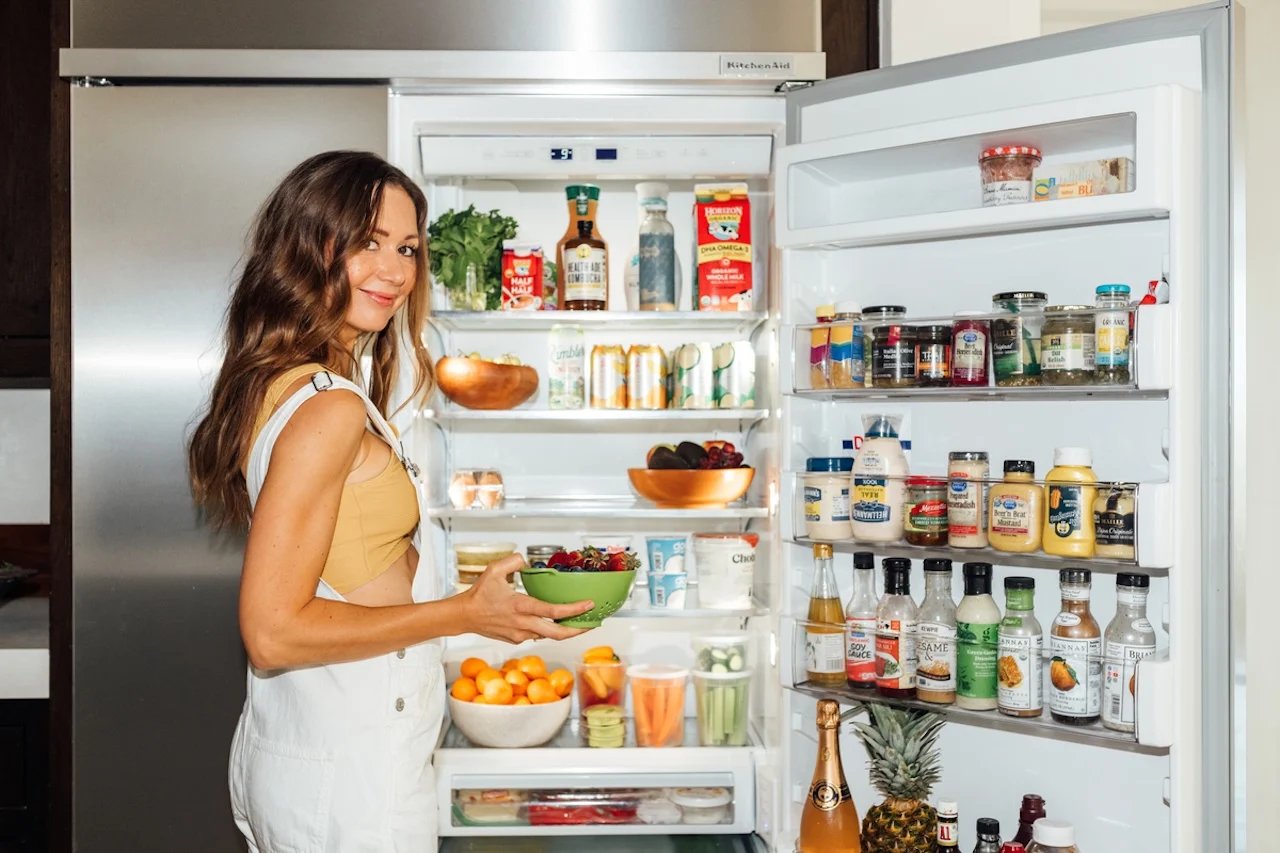
Spring always brings the urge to reset our spaces: open the windows, clear the counters, and start fresh in the kitchen. One of the most satisfying places to begin? Your fridge.
An organized refrigerator doesn’t just look better when you open the door—it helps reduce food waste, keeps produce fresh longer, and makes everyday cooking a whole lot easier. When everything has a place, and you can clearly see what you have, you’re more likely to use the ingredients you buy instead of forgetting them in the back of a drawer. (Please tell me you’ve also been there… )
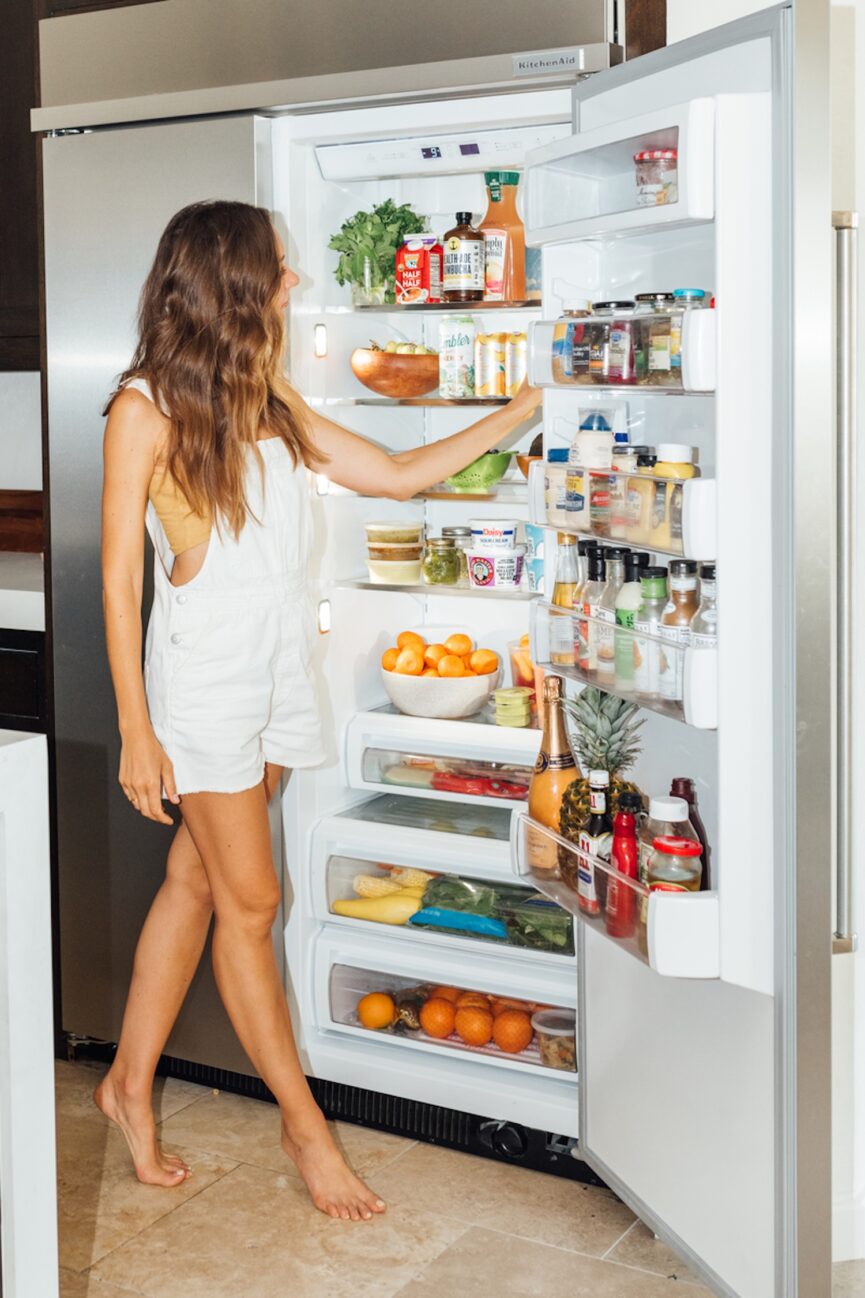
How to Organize Your Fridge (Step-by-Step)
The key to organizing your fridge is building a system that works with your real life. Your refrigerator changes constantly with every grocery run, so the goal is to create simple zones and storage habits that keep things fresh, visible, and easy to maintain.
Ahead, we’re breaking down exactly how to organize your fridge, plus the best ways to store produce, herbs, and everyday ingredients so they last as long as possible.
Start With a Fridge Reset
Before you can organize your fridge, you need a clean slate. Think of this step less as a deep-cleaning chore and more as a reset—an opportunity to take stock of what you actually have and create space for food that will truly get used.
Set aside about 20–30 minutes and treat it like a small kitchen refresh. Put on a favorite playlist and start by removing everything from the fridge so you can see exactly what you’re working with.
Step 1: Empty the Fridge Completely
Take everything out—yes, everything. This makes it much easier to see expired items, forgotten leftovers, or produce that’s past its prime. As you remove items, group similar foods together on the counter so you can quickly assess what you have.
Step 2: Toss or Compost What’s Past Its Prime
This is your moment to be honest about what’s still usable. Check expiration dates, smell-test leftovers, and compost any produce that’s beyond saving. It’s normal to find a few forgotten items—this step alone often helps reduce food waste moving forward.
Step 3: Give the Fridge a Quick Clean
With the shelves empty, wipe down all surfaces—including shelves, drawers, door bins, and handles. A simple non-toxic cleaner or warm water with a little dish soap works perfectly here. Pay extra attention to sticky spills or produce drawers where moisture can collect.
Step 4: Take Inventory Before Putting Everything Back
Before returning items to the fridge, take a quick mental inventory. Ask yourself:
- What ingredients do I reach for most often?
- What produce needs to be used soon?
- Are there duplicates of anything I forgot I had?
This small pause helps you create a system that reflects how you actually cook and eat.
Step 5: Reset With Intention
Now that everything is clean and visible, you’re ready to start organizing. You should aim to create simple zones and storage habits that make ingredients easy to find and use.
When your fridge is set up thoughtfully, you’ll spend less time searching for ingredients, waste less food, and make everyday cooking feel much more effortless. Because opening your fridge should feel calm, not chaotic—and a simple reset makes that possible.

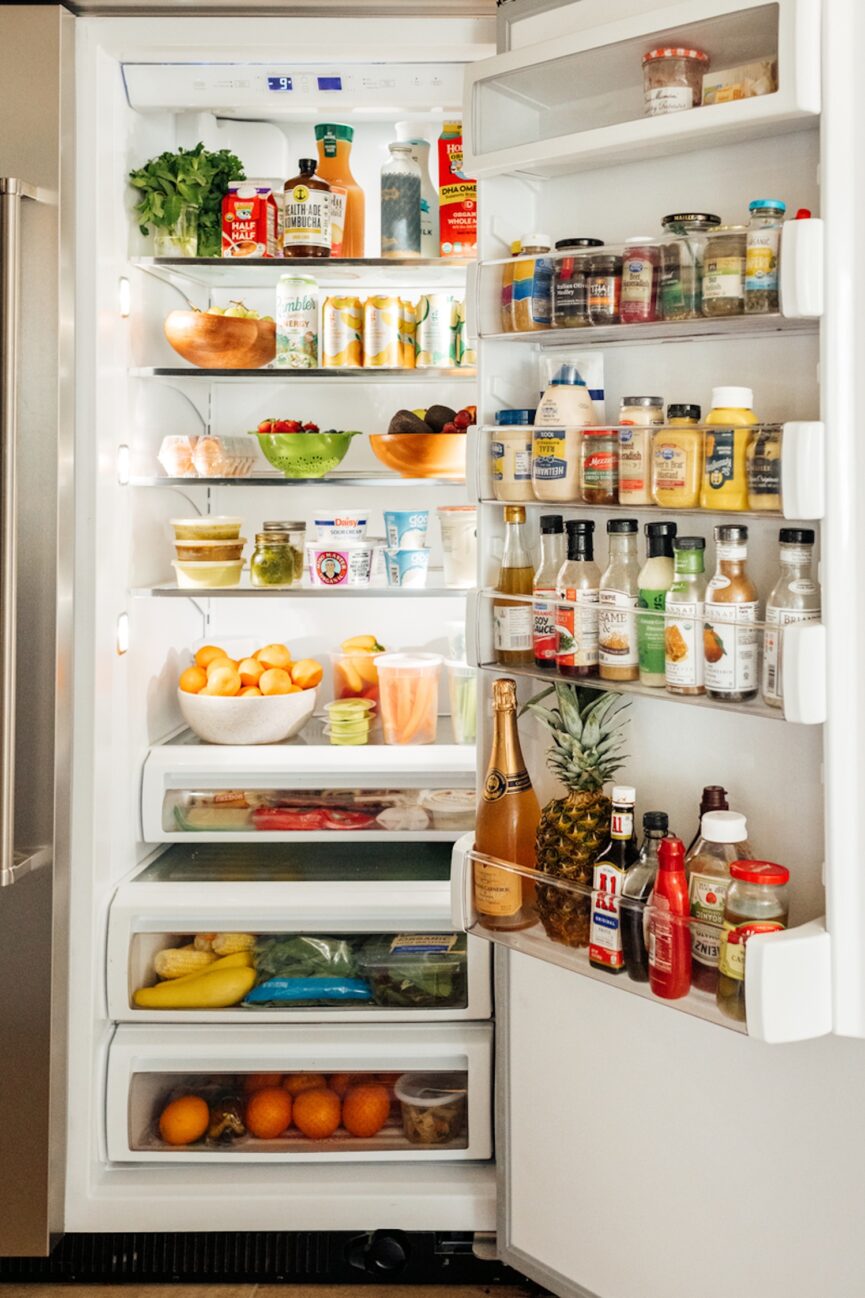
Understand Your Fridge’s Zones (and What to Store Where)
One of the most helpful things to understand when learning how to organize your fridge is that not every shelf is the same temperature. Refrigerators naturally create warmer and colder areas depending on how air circulates, and storing food in the right zone can significantly extend how long ingredients stay fresh.
Once you know where different foods belong, organizing your fridge becomes much simpler—and much more effective.
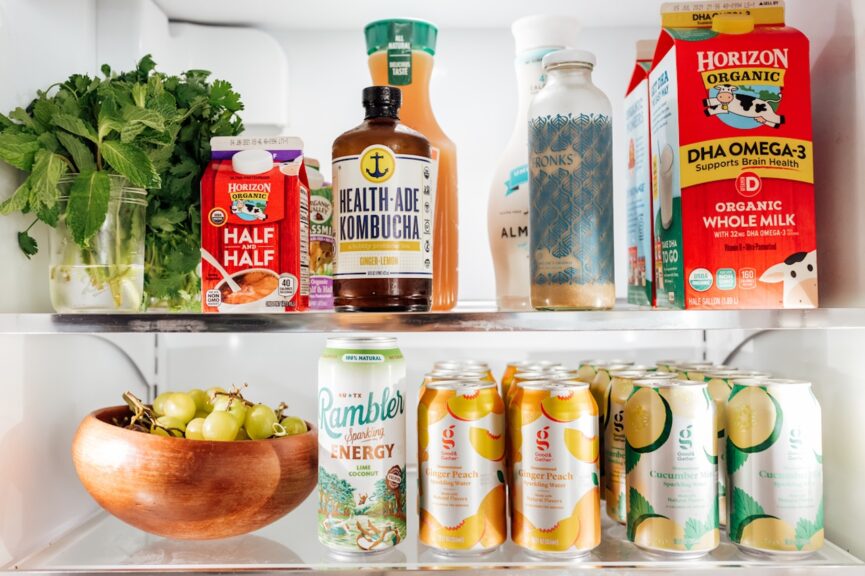
Top Shelves: Ready-to-Eat Foods
The top shelves tend to maintain the most consistent temperature, making them ideal for foods that don’t need additional cooking.
Store here:
- leftovers
- prepped ingredients
- yogurt
- cooked grains
- drinks
Keeping ready-to-eat foods on the upper shelves also makes them easy to see and grab, which helps prevent leftovers from being forgotten in the back of the fridge.
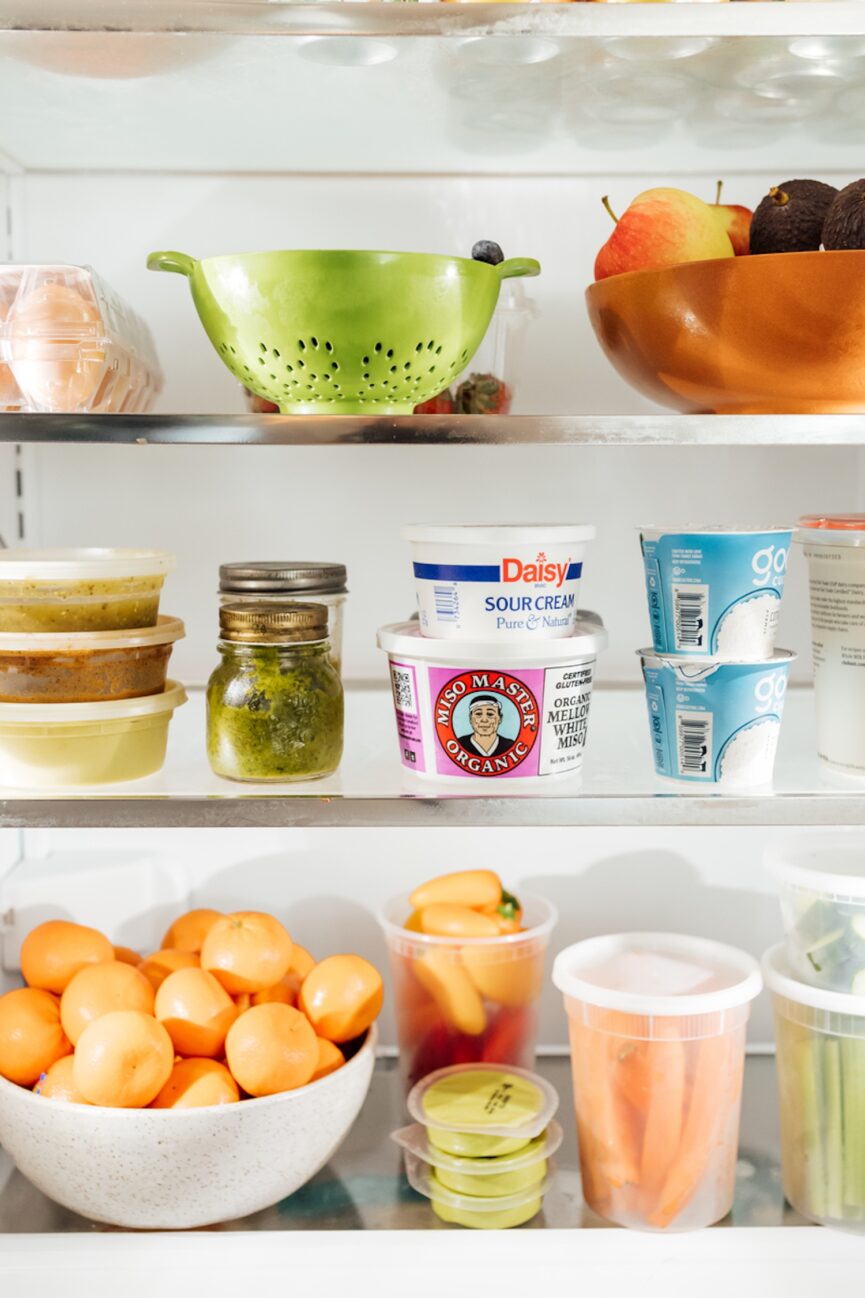
Middle Shelves: Dairy and Everyday Staples
The middle section of your fridge is a great place for ingredients you reach for frequently.
Store here:
- milk
- cheese
- butter
- eggs
- sauces and spreads
These items stay fresh longer when kept in the more stable center of the fridge rather than the door, where temperatures fluctuate every time it opens.
Bottom Shelf: The Coldest Zone
The lowest shelf is typically the coldest part of the refrigerator, making it the safest place for foods that go bad quickly.
Store here:
- raw meat
- poultry
- seafood
- eggs (for maximum freshness)
Keeping these foods on the bottom shelf also prevents any accidental drips from contaminating other ingredients.
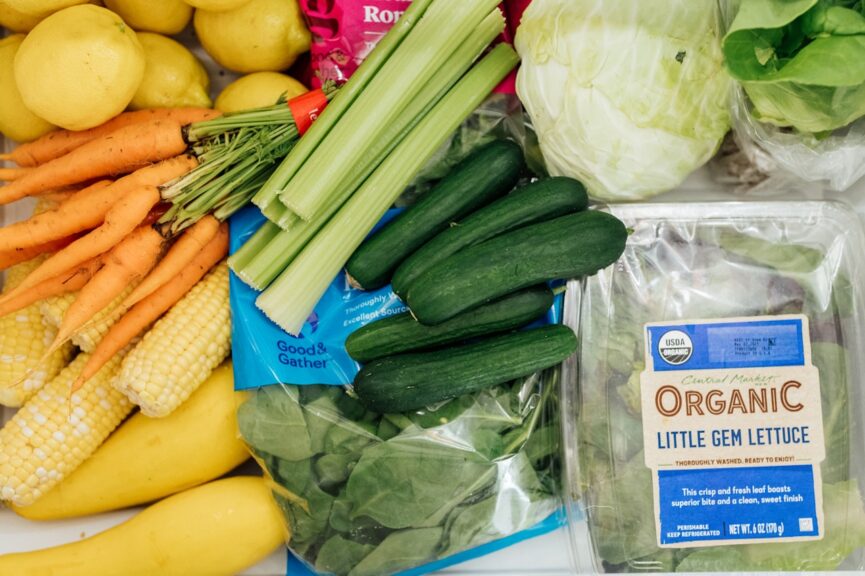
Crisper Drawers: Fruits and Vegetables
The drawers at the bottom of your fridge are designed to control humidity, helping produce stay fresh longer.
A simple rule: one drawer for fruits and one drawer for vegetables. Many fruits release ethylene gas, which speeds up ripening and can cause nearby vegetables to spoil faster.
Best practices:
- Store leafy greens and herbs in the higher-humidity drawer
- Store fruits in the lower-humidity drawer
- Keep produce loose or lightly wrapped so air can circulate
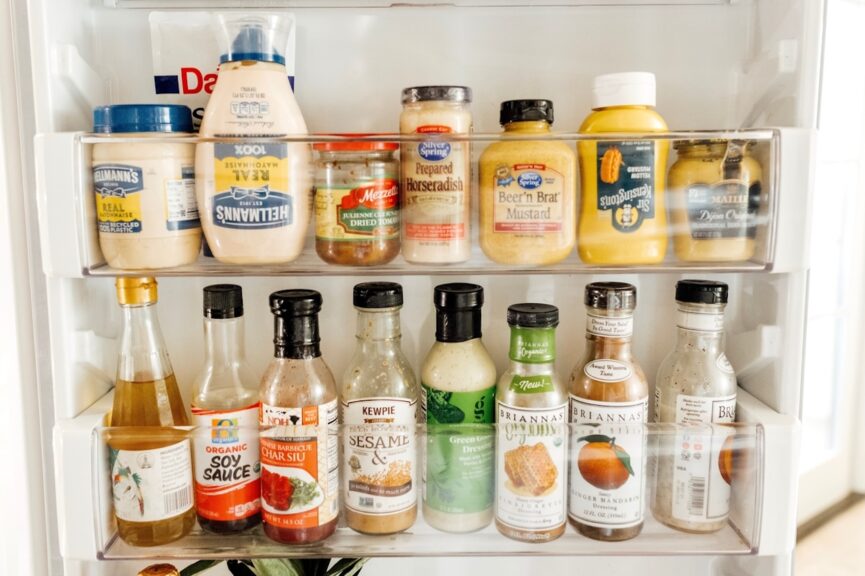
The Door: Condiments and Drinks
The fridge door is the warmest area because it’s exposed to temperature changes every time it opens. For that reason, it’s best used for items that are naturally more shelf-stable.
Store here:
- condiments
- salad dressings
- jams
- beverages
Avoid storing milk or eggs here—they’ll stay fresher longer inside the main body of the fridge.
Tips to Store Food So It Lasts Longer (and Prevents Waste)
One of the biggest reasons food gets wasted isn’t that we buy the wrong ingredients—it’s that we store them incorrectly. When foods are placed in the wrong areas of the fridge or stored in the wrong containers, they spoil much faster than expected.
A few small storage habits can extend the life of your groceries and help ensure everything you buy actually gets used.
Keep Produce Visible
Out of sight often means out of mind. If fruits and vegetables disappear into the back of a drawer, it’s easy to forget they’re there until it’s too late. Try placing produce that needs to be used soon toward the front of your fridge or in a small “use first” section. This simple visual cue helps you plan meals around ingredients at peak freshness.
Separate Fruits and Vegetables
Many fruits release ethylene gas, which speeds up ripening and can cause nearby vegetables to spoil faster. For best results:
- Store fruits and vegetables in separate drawers
- Keep ethylene-producing fruits away from leafy greens
Common ethylene-producing fruits include apples, bananas, avocados, and peaches.
Store Herbs Like Fresh Flowers
Fresh herbs can last much longer with the right storage method.
For soft herbs like parsley, cilantro, and basil, trim the stems and place them upright in a small jar with a little water. Loosely cover with a bag and store in the fridge.
For hard herbs like rosemary, thyme, and sage, wrap them gently in a damp paper towel and store them in a container.
Keep Dairy and Eggs in the Main Body of the Fridge
Many refrigerators include egg trays in the door, but that’s actually one of the warmest spots in the fridge. Dairy products and eggs stay fresher when stored on the middle shelves, where temperatures are more consistent.
Use Clear Containers for Leftovers
Leftovers are one of the biggest sources of food waste simply because they get buried in the fridge. Using clear containers makes it easy to see what you have and reminds you to use it before it spoils.
Follow the “First In, First Out” Rule
Professional kitchens rely on a simple system: first in, first out. When unpacking groceries, move older items toward the front and place new items behind them. That way, ingredients are used in the order they were purchased.
When ingredients are stored properly and easy to see, you naturally waste less food—and cooking at home becomes much easier.
The 5-Minute Weekly Fridge Reset
When your refrigerator changes every time you grocery shop, cook a meal, or store leftovers, the most effective systems are the ones that are easy to maintain. That’s where a quick weekly reset comes in. Taking just five minutes once a week can keep your fridge organized, reduce food waste, and make meal planning much easier.
Try this simple routine before your next grocery run:
1. Toss Anything Past Its Prime. Check for expired items, forgotten leftovers, or produce that’s no longer usable. Compost what you can and clear space for fresh ingredients.
2. Move Older Foods to the Front. Follow the “first in, first out” rule by moving older ingredients toward the front of the fridge so they get used first.
3. Wipe Any Spills or Sticky Spots. A quick wipe-down of shelves or drawers keeps small messes from turning into bigger cleaning projects later.
4. Check Your Produce Drawers. Take a quick look through fruits and vegetables and plan to use anything that’s nearing its peak. This can easily inspire a simple dinner or smoothie.
5. Take Inventory Before You Shop. Noting what you already have helps prevent duplicate purchases and encourages you to build meals around ingredients already in your fridge.
Over time, this five-minute habit makes a big difference. Your fridge stays organized, ingredients stay fresher longer, and cooking at home becomes much easier.
Because when your fridge works with you, everything in the kitchen starts to feel simpler. Cooking becomes easier, groceries last longer, and the ingredients you bring home finally get the chance to shine.
This post was last updated on March 8, 2026, to include new insights.
