


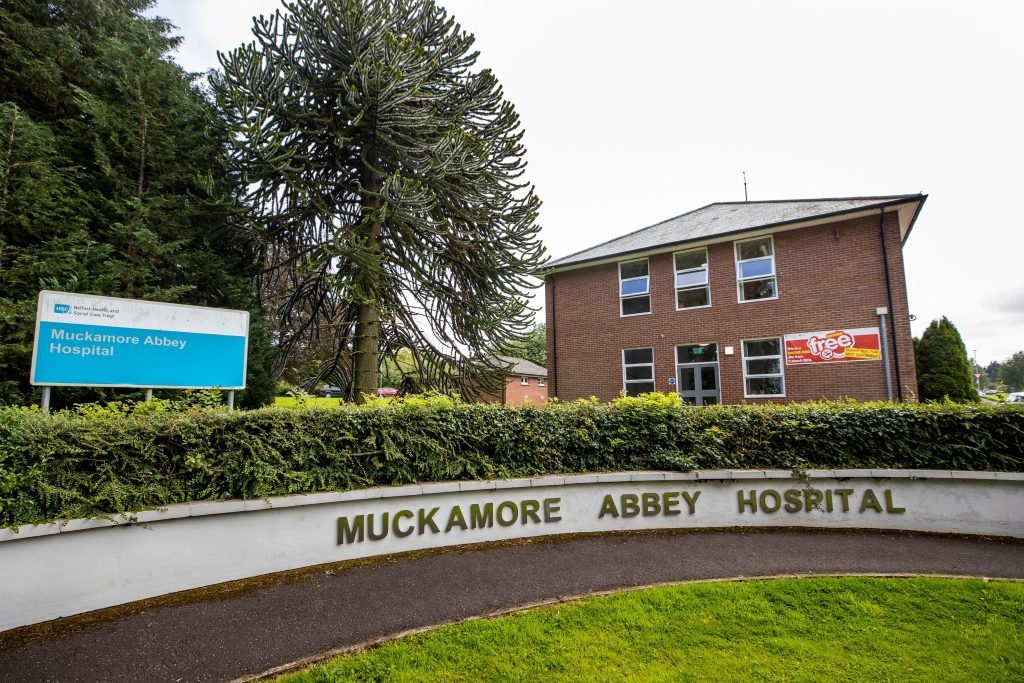
Abuse of patients with learning disabilities at Muckamore Abbey Hospital was the result of ‘the normalisation of deviance’ among staff, according to findings from a major inquiry.
The allowance of poor care or neglect, and minor deviations from the rules and expectations of good practice, “appear to have become normalised” in some parts of the hospital, it found.
“Many patients had their lives made miserable by systematic bullying by certain members of staff whose job it was to look after them”
Tom Kark
This in turn may have led to the more generalised acceptance by some staff of poor standards of behaviour, according to the Muckamore Abbey Hospital Inquiry report, which was published on Thursday.
The independent inquiry was sparked by an inspection of 300,000 hours of CCTV material in 2017, which revealed widespread abuse of inpatients, including excessive restraint, at the facility in County Antrim.
The statutory inquiry, chaired by Tom Kark KC, was subsequently announced in September 2020 and set up in October 2021 to examine the issue of abuse of patients with learning disabilities at the hospital.
It also sought to determine why the abuse happened, the range of circumstances that allowed it to happen and to ensure that such abuse did not occur again in any similar service in Northern Ireland.
The Muckamore Inquiry Report, which made 106 recommendations, was based on oral evidence from 181 witnesses and more than 300 statements.
The report said: “The abuse did not involve every patient nor every member of staff, nor a majority of the staff.
“But many patients had their lives made miserable by systematic bullying by certain members of staff whose job it was to look after them.”
It said that relatives of patients spoke consistently of concerns about the appearance of unexplained injuries upon the patients as well as, for many, a lack of basic care for the needs of patients.
“We heard extensive evidence concerning injuries sustained by patients, particularly bruises, unexplained marks and signs consistent with physical abuse,” the report said.
It added: “The use of restrictive practices is the area in relation to which the most obvious elements of what might be termed abuse were to be found.”
In addition, it said families provided accounts of a lack of attention to the physical health needs of the patients in the hospital.
The report stated: “Teeth and nails were sometimes neglected, particularly toenails, which were sometimes allowed to grow so long as to cause serious discomfort.”
Significant weight gain, as well as weight loss for others, were continuing problems for patients, it said. “We heard about several patients who became obese, and weight gain could be dramatic.”
Responding to the report, Northern Ireland health minister Mike Nesbitt said: “I would like to pay tribute to all the patients, families and carers who firstly raised these issues.
“The system, which should have ensured that the most vulnerable in our society were protected, nurtured and cared for, failed you in that core duty. You were let down and for that I am truly sorry.
“In receiving this report, I want to be clear that this represents a watershed moment for the [health and social care] system in how it cares for the most vulnerable members of our society.
“We are committed to ensuring that what happened at Muckamore will never happen again,” Mr Nesbitt said.
He added: “I will make a further statement to the [Northern Ireland] Assembly early next week to set out our next steps in relation to addressing the Inquiry’s recommendations.”
In a statement, Jennifer Welsh, chief executive of Belfast Health and Social Care Trust, which runs Muckamore, apologised directly to those who “experienced abuse, neglect, and at times, cruelty”.
“I am truly, deeply sorry for everything that you have suffered, and for the lasting impact that such appalling behaviour will have left on you,” she said.
“In your interactions with many staff in Muckamore Abbey Hospital, safety, dignity and compassion were in short supply,” she said. “I simply cannot imagine what this was like for you.
“On behalf of this trust, and the senior team gathered here today, I, as chief executive, take full responsibility for the wrongs committed against you and I offer you my unreserved apology.”
Also responding to the report, Professor Rita Devlin, executive director of the Royal College of Nursing in Northern Ireland, said: “We welcome the publication of the final report.”
She said: “The lessons from Muckamore must inform practice across health and social care settings, strengthening safeguarding frameworks and ensuring that early warning signs are never ignored.
“When systems fail and care is compromised, it is essential that healthcare staff are empowered and supported to speak up without fear and that robust systems exist to respond quickly and effectively.”
She added: “We must ensure that people with learning disabilities are able to access safe, lawful, effective and equitable care throughout their life.
Safe, therapeutic environments require appropriate staffing levels, strong leadership and a culture where safeguarding is everyone’s responsibility,” she said.
“Investment in training, supervision and workforce capacity are essential to ensure staff can fulfil their professional obligations and deliver safe, person-centred care.
“Above all, we must ensure that the failures exposed at Muckamore Abbey Hospital are never repeated,” Professor Devlin said.
“Safeguarding vulnerable adults is not optional,” she said. “It is a fundamental duty that must sit at the heart of care provision.”
In its response, the Nursing and Midwifery Council (NMC) said patients were badly let down and there was no place in health and care for staff who did not treat others with compassion and dignity.
It highlighted that Muckamore Abbey was one of the largest cases of systemic abuse and neglect in the history of the NHS, involving people with learning disabilities and mental health conditions.
The regulator also revealed that it currently had 54 open cases relating to Muckamore Abbey. Of these, four were at the initial assessment stage of the fitness to practise process.
A further 50 were currently undergoing full investigations. Of these, 25 registrants were subject to interim suspension orders and 15 were subject to interim conditions of practice orders.
Paul Rees, NMC chief executive and registrar, said: “The shocking abuse at Muckamore Abbey should never have happened, and it’s right that these failures have been fully brought into the open.
“The inquiry has shed light on how serious abuse was able to occur over a long period, and how different parts of the health, safeguarding and justice systems responded.
“Its findings are deeply upsetting – we must all recognise the profound and lasting impact this abuse has had on people’s lives,” Mr Rees said.
“There must now be lasting and meaningful change, and we’ll play our part in a coordinated, whole system response to help ensure such widespread abuse is never repeated.
“The NMC will now carefully consider the inquiry’s findings in full. It is committed to learning from recommendations relevant to its regulatory work,” he added.
Timeline on Muckamore Abbey Hospital
