


Green your time of the month, with this ultimate guide to eco-friendly period products – from washable pants to pads, to moon cups, sponges, organic tampons and towels and more.
I’d like to talk about something that I feel isn’t talked about enough – periods. And specifically, sustainable period products.
Before I begin, I want to make it clear that when it comes to periods (and most aspects of life, to be honest), I’m of the firm belief that you should do whatever works best for you. As such, this post comes with zero judgement if none of the following options work for your flow or your circumstances.
The Ultimate Guide to Eco-Friendly Period Products
I’ve tried quite a few different sustainable and eco-friendly period options options over the years. Some are easier to use than others, and some have a steeper learning curve than others, so here’s all you need to know.
Before we get into the options, it can help to know that you absolutely do not need to try everything. Most people end up finding one or two options that suit them and then stick with those. I personally use a combination of reusable pants and pads.
Menstrual Cups

Menstrual cups are probably the first thing you think of when it comes to eco-friendly period products. However, to be honest, and perhaps to your surprise, I was never really on board with the idea of a menstrual cup. I would go as far as to say I was a bit grossed out by the idea. It took me a long time to want to try them out.
Using a cup does take a bit of practice, and they can have a steep learning curve. First, it can take a bit of trial and error to insert and remove a menstrual cup properly. And secondly, it can take a while to start to feel comfortable using it when you’re out and about.
The good news is that once you master insertion, the cup can stay there for 12 hours. This means, for the most part, there’s no need to take it out when you’re not at home. It’s easily cleaned, and there’s no risk of Toxic Shock Syndrome, even if you forget to take it out.
If you do need to change it whilst you are out, you can simply empty it into the toilet, wipe it with tissue, and reinsert. You can give it a proper rinse when you’re back home.
There are quite a few suppliers of menstrual cups in the UK. The most popular one is Moon Cup (£19.95 at Ethical Superstore).
Moon Cup comes in two sizes – one if you’re under 30, and (slightly horrifyingly!) one if you’re over 30 and/or have had a child. However, there are heaps of other reusable cup brands available at Ethical Superstore, including DAME and &Sisters (pictured above) – all around the same pricepoint.
I’ve found that the internet likes to sing the praises of menstrual cups. But personally, I’ve found I can’t use cups. Despite trying a few brands, they just don’t work for me. I think it’s something to do with childbirth. That’s not to say that anyone who has had a baby can’t use a cup, though. It’s just that I needed physio after having both my children, and I don’t think my problems were fully resolved with physio.
There are a few conditions that may mean that you can’t use cups, and they can be tricky to use if you have mobility or dexterity problems, so don’t worry if cups aren’t right for you.
Period Pants

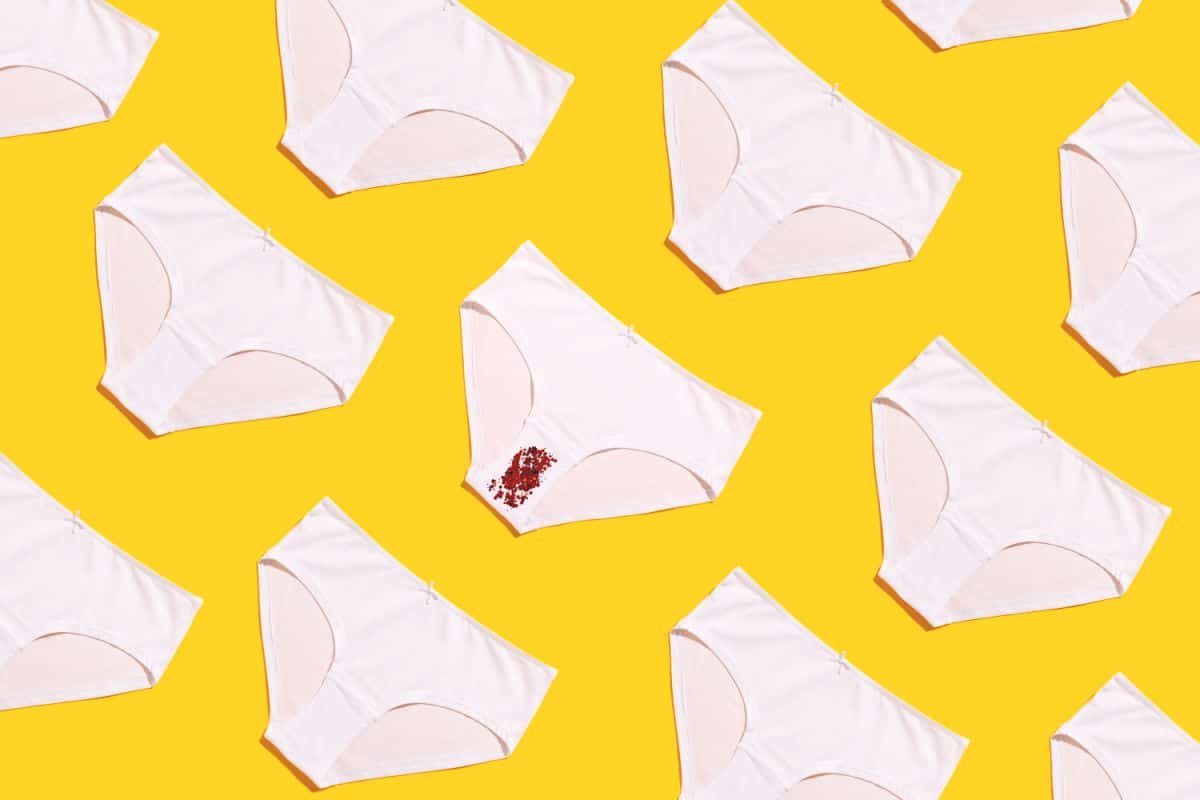
Period pants are absorbent pants that you wear during your period, without the need for any other sanitary protection. You then pop them in the wash and reuse them time and again.
I’m a huge fan of period pants. Unlike menstrual cups, there’s no real learning curve. You just pop them on and off you go. They are a bit more involved, in that you need to change them more frequently than you would a cup, and then there’s laundering them. However, they are so easy to wear – if you can put a pair of pants on and off, then generally you can use period pants.
I have a few pairs of period pants – including from Wuka (pictured above) and Modibodi. When I got my first pair, I’ll admit, I was worried the pants might feel like wearing a nappy. However, they aren’t at all bulky, so it feels like you are wearing regular pants.
In fact, you can pop them on and almost forget that you have your period. I particularly love wearing my period pants at night-time. It’s so much more comfortable than wearing a sanitary towel.
Whilst I really love my period pants, and honestly wouldn’t be without them, I would say that there are a couple of drawbacks to period pants.
Firstly, it can be slightly awkward having to remove your trousers or tights to change your pants, especially when you’re not at home. For that reason, I prefer to wear mine at night or on lighter-flow days. Alternatively, I’ve got a clever period pant tip for when you are out and about, that’s a useful one to know.
The second is the cost aspect. Period pants are not the cheapest option, coming in at around £12 a pair. This means it may get expensive having to buy multiple pairs of pants. I’ve built my collection up slowly over time, buying a pair of pants here and there whenever I’ve been able to do so.
With proper care, period pants can last several years, which really helps balance out the upfront cost. Some of my pairs are about six years old, and still going strong.
Want to know more? I’ve written a full guide on everything you need to know about period pants, including the questions you might be afraid to ask. You can also check out my guide to the best period pants to help you find the right pair for you.
Washable Sanitary Towels

Washable sanitary towels are exactly as the name implies. I have a few pads, and I would say there is not much of a learning curve. You just need to pop them in your pants, and you are good to go.
I have a few towels in my collection and really like them. You just use them like regular pads, and then pop them in the wash. They’re also much easier to change when you are out and about, compared to period pants.
I think the main drawback for some will be the need to carry used ones around with them. I’d recommend getting a small, zippable wet bag (the selection at Etsy is the best) to keep in your bag. You can then place your towels in there when you’re done using them, and then pop them in the washing machine when you get home.
I’ve got a full beginner’s guide to reusable sanitary pads if you want to know the full ins and outs of using washable pads.
Want to give pads a try? UK stockists of washable sanitary towels include Wuka (from £15.99 for two) and Ethical Superstore (from £9.99). There are also more reusable pad sellers on Etsy than you could shake a stick at. I’d recommend opting for pads that have dark-coloured lining, as these will not show any stains.
Sea Sponges
Sea sponges are essentially natural tampons. In our modern world, this is probably considered the most ‘out-there’ option when it comes to sustainable and eco-friendly period products. It’s also not one that I’ve tried. However, from what I’ve read, sponges are fairly straightforward to use. Simply wet the sponge and insert it, like you would with a tampon.
You’ll know when they need changing when you feel it drop down a bit. When it’s time to remove it, you can pull it out, rinse it in clean water, and re-insert it. At the end of your period, your sponge can be washed in the washing machine and then stored for the following month. With care, it should last roughly a year.
From what I can see, sea sponges have a couple of drawbacks. The first is that you need to rinse them every time. Therefore, they may be difficult to use when you’re not at home, as finding a public toilet with a private sink can be tricky. The other issue is that sea sponges are made of natural sponge rather than synthetic sponge. This means if you’re vegan, sea sponge probably isn’t for you.
If you’re interested in sea sponges ,then you can try the rather ethereal-sounding Moon Sponges. These cost £15.99 and are reusable for up to 12 months.
Disposable Sustainable Period Products

If none of the options above sway you, or if you’re having trouble finding one that suits your needs, fret not! Another sustainable choice is transitioning to organic tampons or sanitary towels.
Conventional tampons and sanitary towels have been reported to contain traces of pesticides and insecticides. If you are looking for organic alternatives, try Natracare (from £2.75) or Eco by Naty (from £2.57) – both available at Ethical Superstore. I’ve used both and really rated them. I have also heard good things about Daye (from £4.50), who make organic and plastic-free tampons and pads.
What’s The Best Option For Me?
It’s hard to say exactly what the best option is, but generally:
- If you have a heavy flow, many people find menstrual cups, washable pads or higher-absorbency period pants work best.
- If you want the lowest effort option with no learning curve, period pants or washable pads are usually the easiest place to begin.
- If you don’t like the idea of internal products, pants and pads are ideal.
- If you’re on a tight budget, washable pads are often the cheapest way to start building a reusable collection.
A lot of people find it best to mix and match. My setup is that I use period pants at night and when I’m at home. When I’m out and about I use a combination of washable pads and period pants.
I also keep some organic disposables in my bag as a backup, as now I’m in my forties my period does not stick to a schedule anymore! The joys of perimenopause.
It’s also worth saying that things like heavy bleeding, endometriosis, pelvic floor issues, mobility challenges, shared bathrooms, travel, or caring responsibilities can all affect what feels practical. What works great for one person might be completely impractical for another, so there’s absolutely no shame in using disposable products if none of these work for you or are suitable for your circumstances.
Your Experiences
I’d be interested to hear about your experiences with eco-friendly period products. What have you tried and what do you swear by? And what pain relief methods do you use? I’m a hot water bottle kind of person myself!
You can also check out my guide to plastic-free bathroom products if you’re looking for inspiration on how to reduce plastic waste.
Sign Up For The Moral Fibres Substack
Get all the latest articles from Moral Fibres straight to your inbox, once a month, free of charge through Substack. You can also upgrade to be a paid Substack subscriber, where you’ll receive an additional two exclusive articles a month. Sign up now:
