


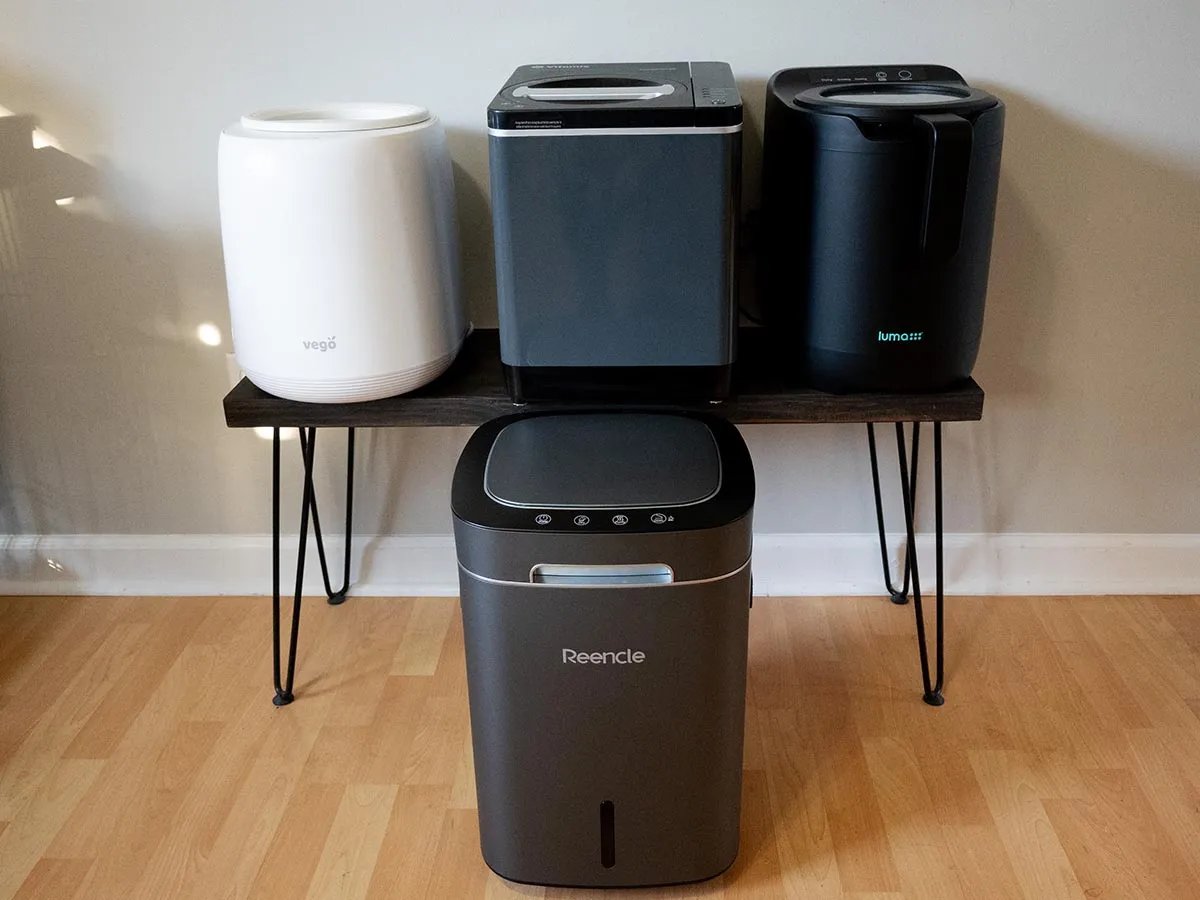
Electric composters simplify and speed up the natural composting process, turning food scraps into compost more efficiently than manual composting methods. While traditional composting is a great way to reduce landfill waste and create nutrient-rich soil, without the help of a machine, it can take at least 4 weeks and often involves odors, pests, and frequent maintenance. Many people don’t have the space or time to manage an outdoor compost pile. Electric composters offer a faster, cleaner alternative. Though they don’t produce traditional compost, they create a soil additive in just a few hours or days by drying and grinding food scraps.
To help you choose the best option for your composting needs, we tested leading models over 2 weeks. Our top pick is the Vego Kitchen Composter for its multi-mode options, sleek design, ease of use, and smart features. It reduces kitchen waste by 85 to 95 percent without odors. Whether you’re composting to improve your garden or simply to reduce food waste, read on to learn what factors convinced us to highlight the following units as the best electric composters on the market.
- BEST OVERALL: Vego Kitchen Composter
↓ Jump to Review - BEST BANG FOR THE BUCK: Vitamix FoodCycler FC-50 Electric Composter
↓ Jump to Review - BEST FOR MICROORGANISMS: Reencle Home Composter
↓ Jump to Review - BEST FOR GREEN BINS: Luma Electric Kitchen Composter
↓ Jump to Review - BEST LARGE: Geme Bio Electric Composter
↓ Jump to Review - BEST AT FAST COMPOSTING: Airthereal Revive Electric Kitchen Composter
↓ Jump to Review
Electric Composters Comparison
Before You Buy an Electric Composter
Electric composters, although convenient, don’t utilize a traditional composting process. They dry and grind up food, but the bacteria that helps convert the food into usable nutrients for plants is missing. Since electric composters bypass this process, they don’t produce the methane gas and carbon dioxide that traditional compost piles do. Furthermore, the accelerated process and the heat involved can kill bacteria and microbes that actually help make good compost.
For this reason, some electric composters for home use come with bacteria packets that are meant to be added to the dried food at the end of the process. However, those looking for a more traditional method of composting can turn to outdoor compost tumblers or consider vermicomposting (a fancy word for composting with worms), which produces compost faster than outdoor tumblers and can also be done inside the home.
Although electric food composting machines offer a convenient way to minimize the amount of food waste that makes it into the garbage and landfill, they’re better for some uses than others. They are designed exclusively for indoor use, so they’re ideal for people who don’t have any type of yard space for a compost tumbler. They also generate material regardless of the weather, so those who live in areas with long or severe winters can still get a soil amender for year-round use.
People with mobility challenges may also benefit from an electric composter since there is no need to manually turn a pile or spin a heavy tumbler outside. Using the dehydrated compost grounds from the electric composters is easy, as they generate small piles that you can use just about anywhere.
Our Top Picks
In addition to their unique features, all of these electric composters earned a spot on our list of top picks due to their well-executed designs, rapid cycles, and the high quality of the material they produce at the end of each cycle.
Best Overall
Photo: Amazon
What We Like
- Users can choose from various modes
- Space-saving design
- App is easy to use
- Controls odors effectively
Specs
-
Dimensions:
14.4 inches high by 11.2 inches wide by 12.6 inches deep -
Shortest cycle time:
2 to 8 hours -
Bowl capacity:
16.9 cups (4 liters)
Our Ratings: Ease of Use 5/5; Odor Control 5/5; Durability 5/5; Noise 3/5; Value 4.6/5
The Vego Kitchen Composter is the latest innovation from Vego, known for its range of gardening products, including raised garden beds and reel hoses. We’ve tested numerous electric composters, and Vego’s model excels in design, ease of use, compost quality, and smart features. Compact and sleek, it fits easily under the kitchen sink or on a countertop, offering a discreet way to recycle kitchen scraps. Thanks to its effective filtration system, it works without generating odors, making it simple to operate—just add your food scraps, and it handles the rest. Although it doesn’t accept meat, dairy, or fibrous vegetables (similar to other composters), it efficiently processes most household organic waste.
We were impressed by this composter machine’s efficiency, with four modes that let users choose the ideal setting for their needs. We mostly use the eco mode (which breaks down food in just a few hours), then add the byproduct to our outdoor composting bin to complete the composting process. However, if you need ready-to-use compost, adding Vego Tabs will accelerate the decomposition process.
The only downside is the lid. While its glass construction lets you monitor the process, the handle is difficult to operate. But overall, the Vego Kitchen Composter is an excellent choice for anyone looking to start or upgrade their composting setup.
What our tester says: “A feature that really impressed me was the accompanying app. While unnecessary, it enhanced the user experience by providing useful functions, like a built-in scale that adjusts processing times based on the weight of scraps, and monitors the device, giving updates on the current cycle, compost production, and the user’s carbon footprint.”—Debbie Wolfe, Product Reviews tester and writer
Get the Vego electric composter at Amazon or Vego.
Best Bang for the Buck
Photo: Amazon
What We Like
- Very straightforward to use
- Can process almost any type of kitchen waste
- No special additives are needed
- Removable waste bucket with carbon filter lid
What We Don’t Like
- Makes loud noises while grinding
Specs
-
Dimensions:
14.2 inches high by 11 inches wide by 12.6 inches deep -
Shortest cycle time:
3 to 8 hours -
Bowl capacity:
10.5 cups (2.5 liters)
Our Ratings: Ease of Use 5/5; Odor Control 5/5; Durability 5/5; Noise 3/5; Value 5/5
The Vitamix FoodCycler takes up just 1 cubic foot of counter space and holds 10.5 cups of food scraps. The dishwasher-safe bucket has a carbon filter to reduce odors. We kept it on a kitchen counter, letting it collect scraps throughout the day before running a cycle.
It’s a versatile unit capable of handling a range of kitchen waste, including small bones and leftovers. That said, it struggles with sticky or fibrous foods like watermelon or celery, so for that type of kitchen waste compost, we recommend adding dry scraps or coffee grounds for better results.
Though designed for quiet operation, the grinding noise is quite loud, so we avoid running it at night. The locking lid is a helpful safety feature, especially with children or pets around, and the display lets you know when filters need changing. For soil amendment, Vitamix recommends mixing 1 cup of dried scraps with 10 cups of soil and letting it sit for 10 days.
What our tester says: “What I love about the FoodCycler is its simplicity—no additives are needed to break down waste. However, it doesn’t produce actual compost, just dried, ground-up scraps. Since the cycles are fairly short compared to other electric composters, users can run multiple cycles a day and add the byproduct to a green bin or compost pile.”—Debbie Wolfe, Product Reviews tester and writer
Get the Vitamix electric composter at Walmart.
Best for Microorganisms
Photo: Amazon
What We Like
- Accepts a variety of food byproducts
- Extremely quiet while running
- Requires minimal maintenance
- Creates real compost
What We Don’t Like
- Motion sensor to open lid is finicky
- Not truly odorless
Specs
-
Dimensions:
18.4 inches high by 13 inches wide by 12 inches deep -
Shortest cycle time:
Not applicable -
Bowl capacity:
59 cups (14 liters)
Our Ratings: Ease of Use 5/5; Odor Control 5/5; Durability 5/5; Noise 3/5; Value 5/5
Due to the heat and speed of their processes, electric food composters don’t support the typical microorganisms involved in composting. As such, brands like Vego and Lomi require you to add a proprietary blend of microorganisms with each cycle. The Reencle indoor composter, however, takes a different approach. It comes with a packet of microorganisms that users mix with water and let sit for 18 to 24 hours. Once they multiply, users never have to add more, as long as they follow the instructions.
The Reencle doesn’t have specific cycles—it stirs the compost whenever food is added. If the compost gets too wet or too much food is added, it will enter a “dry” mode for 1 to 2 days. It can handle up to 2.2 pounds of scraps per day, with 1.5 pounds being ideal.
Reencle also has a sensor that opens the lid with a hand or foot swipe, but the sensor can trigger accidentally as pets or people pass by. We had to angle it toward the wall to stop it from constantly opening. Despite this, it produces real compost every 24 hours.
The downside is the odor. Depending on the microbe balance, you might smell a strong vinegar odor. Reencle suggests adding coffee grounds or bread to help, but in our experience, it doesn’t totally solve the problem. It does take a dedicated effort to keep the compost balance to mitigate the odor, so this may not be ideal for some. However, with its large 59-cup capacity, it’s perfect for large families or those processing lots of scraps.
Get the Reencle electric composter at Amazon or Reencle.
Best for Green Bins
Photo: Amazon
What We Like
- Easy to use
- Accepts almost any type of kitchen waste
- No special additives needed
What We Don’t Like
- Replacing carbon filter may be tedious
Specs
-
Dimensions:
13.8 inches high by 10 inches wide by 14.5 inches deep -
Shortest cycle time:
3 to 6 hours -
Bowl capacity:
(2.5 liters)
Our Ratings: Ease of Use 5/5; Odor Control 5/5; Durability 5/5; Noise 4/5; Value 5/5
If you don’t compost at home but participate in a municipal composting program, the Luma Kitchen Composter is a great addition to your kitchen. This sleek, compact appliance breaks down food scraps into a dehydrated material that can be added to municipal composting programs or outdoor bins. While it doesn’t produce true compost, it significantly reduces food waste and eliminates odors. With its modern, minimalist design, the Luma looks great on any countertop and is perfect for both homeowners and apartment dwellers.
In testing, the Luma’s operation and single-cycle process were similar to the Vitamix FoodCycler. However, the Luma’s design is sleeker, and it’s much quieter during the grinding process. One drawback is the lack of clear information on purchasing additional carbon filter cartridges. The unit comes with an extra filter, but eventually, you’ll need to replace the filter material. The cartridges appear refillable, with loose activated charcoal nuggets like others we’ve tested, but a small screw securing the cover could make it tedious to refill.
Overall, the Luma is efficient, quiet, and stylish, making it an excellent choice for reducing food waste while keeping your kitchen looking modern.
Get the Luma electric composter at Amazon, Wayfair, Walmart, or Newair.
More Great Options
In addition to our top-tested picks, we found several noteworthy electric composters based on their features and user reviews. While we haven’t personally tested them, these products stood out for their impressive capacities, innovative designs, and performance.
Best Large
Photo: Amazon
What We Like
- Comes with microorganisms to help break down scraps
- Can compost most biowaste with high temperatures
- Sits on floor instead of hogging counter space
What We Don’t Like
- Requires opening two lids to deposit food scraps
Specs
-
Dimensions:
26.2 inches high by 12.6 inches wide by 18 inches deep -
Shortest cycle time:
6 to 8 hours -
Bowl capacity:
80.3 cups (19 liters)
Holding up to 80.3 cups (19 liters) of food scraps, the Geme Bio Electric Composter is ideal for those needing a larger capacity. Designed to sit on the floor, it mimics traditional composting by using microorganisms to process 90 percent of biowaste, including small bones and pet waste.
This model features interior deodorization technology, which eliminates bacteria and odors without requiring a carbon filter. Its built-in disinfection system ensures odor control during decomposition.
Unlike traditional composters with specific cycles, the Geme allows users to add food waste as needed. However, the byproduct takes 6 to 8 hours to process, with longer times yielding more compost-like results. Capable of composting meat, dairy, and small bones, the Geme can handle up to 4.4 pounds of food waste daily—more than other electric composters in its class.
Get the Geme electric composter at Amazon or Geme.
Best at Fast Composting
Photo: Amazon
What We Like
- Compact design takes up little space
- Shortest cycle can finish in just 2 hours
- Safety features such as automatic shutoff
What We Don’t Like
- Residue tends to stick to the inner bucket
Specs
-
Dimensions:
12.5 inches high by 10 inches wide by 12.5 inches deep -
Shortest cycle time:
2 to 7 hours -
Bowl capacity:
10.5 cups (2.5 liters)
The Airthereal Revive is the fastest electric kitchen composter on our list, producing soil amendment in as little as 2 hours (up to 7 hours, depending on the type of scraps). Measuring 12.5 inches tall with a 10.5-cup removable bucket, it’s also the smallest countertop composter on our list.
The Revive can compost soft bones, dairy, and meat with just one cycle. Simply press the power button to dry, grind, and cool the scraps, leaving a fraction of the waste to add to the soil. It features an automatic shutoff in case it gets jammed or if the lid is removed.
It utilizes activated carbon filters to help control odors during dehydration. A light indicator signals when to replace filters, typically every 6 months. For quick composting, the Airthereal is our top pick, completing a cycle in as little as 2 hours.
Get the Airthereal electric composter at Amazon, The Home Depot, Wayfair, or Airthereal.
How We Chose and Tested the Best Electric Composters
When choosing the best electric composters, we looked specifically at a few features, including cycle time, number of cycles, design, ease of use, quality of the final product, and customer reviews. In addition, we considered extra features, such as doors that open automatically, and whether the product could compost bioplastics or pet waste.
We looked at more than 10 manufacturers to determine which electric kitchen composters should make the cut. This list was created from extensive product research and hands-on testing.
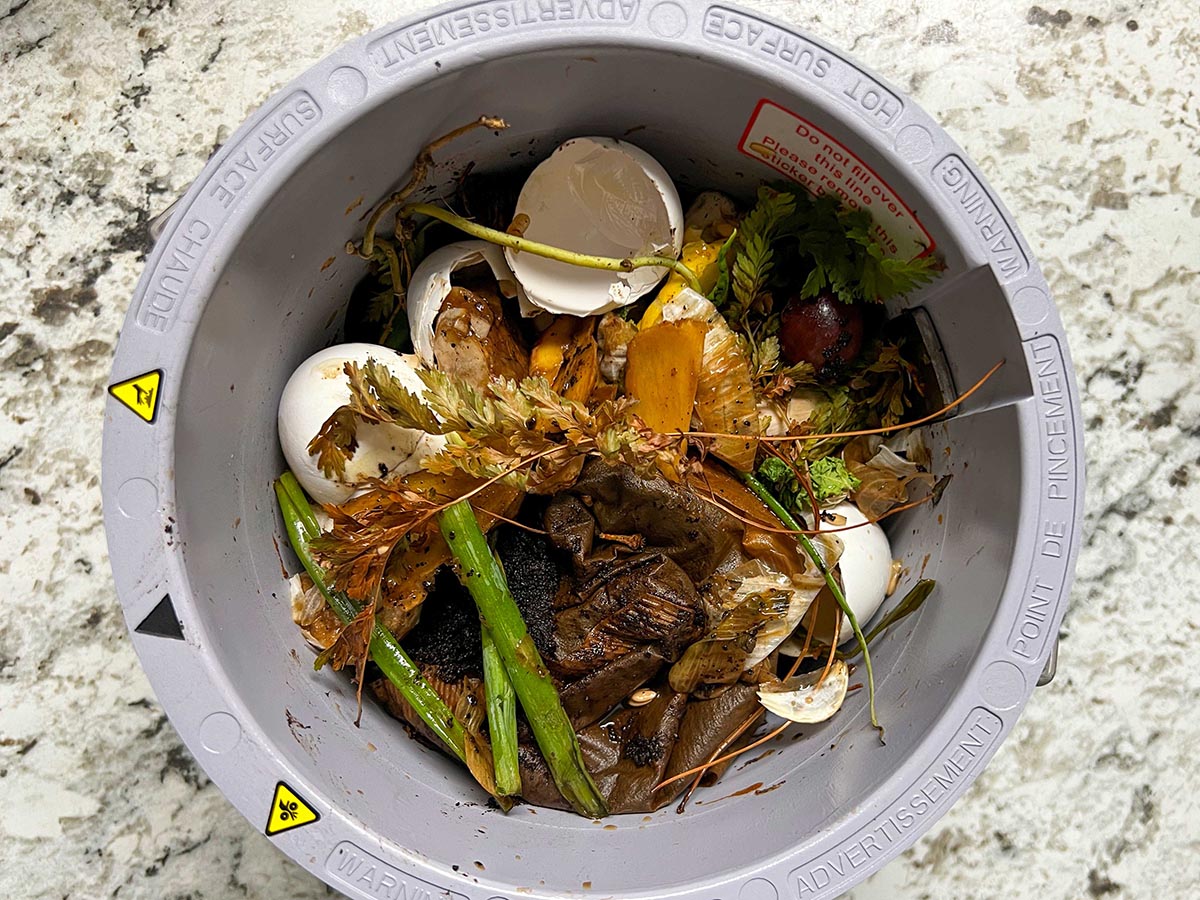
We then rated the electric composters on five key criteria: ease of use, odor control, durability, noise, and value, and evaluated the types of food scraps each could process and whether additives were needed for composting. Over 2 weeks, we processed 1 to 2 pounds of kitchen waste per cycle, weighing the scraps before and after to assess how effectively they were broken down.
What to Consider When Choosing an Electric Composter
Choosing an electric composter requires considering several factors, especially since these machines are an investment and become a part of a household’s daily life. When searching for the right product, it’s important for shoppers to consider the size, capacity, cycle time, and aeration system to determine whether it will fit their needs.
Size
Like traditional compost bins, electric composters vary greatly in size. Most are designed for countertop use and are between 10 and 14 inches high. However, some are too tall to sit under cabinets—depending on the under-cabinet space—and may need to be placed on a freestanding counter without cabinets or on the floor.
Others are designed specifically to sit on the floor; these tend to be between 16 and 26 inches high. These include larger electric composters that could not otherwise sit on a table or counter and act more as trash cans for food waste. It’s important for shoppers to consider where the machine would go before purchasing one for composting in kitchen spaces.
Capacity
Electric food composters also vary in capacity, or the volume of food scraps they can hold and process. Most electric composters can handle between 2.5 liters (10.5 cups) and 19 liters (80.3 cups).
The capacity needed depends on how much food waste a household produces. For example, a 10.5-cup electric composter might be fine for households of two to four people who don’t cook much. However, for households with many occupants or for those who cook frequently, a larger composter might make more sense.
When looking at capacity, shoppers will want to keep in mind that the machine can reduce the amount of food waste put in the composter by about 80 to 90 percent.
Time to Compost
It can take months for typical compost piles to turn food scraps and dry material into usable compost. However, electric food composters can turn food scraps into a soil amender in just a few hours.
Some machines have just one “cycle”, during which they continually break down the food compost using microorganisms, which can take a few days or weeks. However, most electric composters have a cycle or multiple cycles that can dehydrate and grind food in just a few hours, some in as few as 2 to 4 hours.
It’s important for shoppers to understand that with short times such as these, the units do not produce actual compost. The machines create dehydrated food that can be used to add to soil, but it’s not actually compost.
Aeration System
Aeration provides the necessary oxygen for food to break down. In traditional composting, heat is naturally generated by decomposition, but electric composters add heat, which can destroy the beneficial bacteria that would otherwise make it through the composting process to nourish the soil.
All electric composters provide aeration to help break down the material. In addition, most of them use a heating process to dehydrate food before grinding it up. The aeration process removes methane, which would otherwise be produced in a traditional compost pile, while any odors are trapped in the machine’s filtration system, typically through activated carbon filters.
FAQs
Using an electric composter is a relatively simple process, but it’s important to understand how to operate and use these machines for the best results. Below, we’ve compiled the answers to questions people often have when searching for electric kitchen composters.
The amount of electricity used varies depending on the size of the composter, but most use between 0.80 kWh (kilowatt-hours) and 1 kWh per cycle.
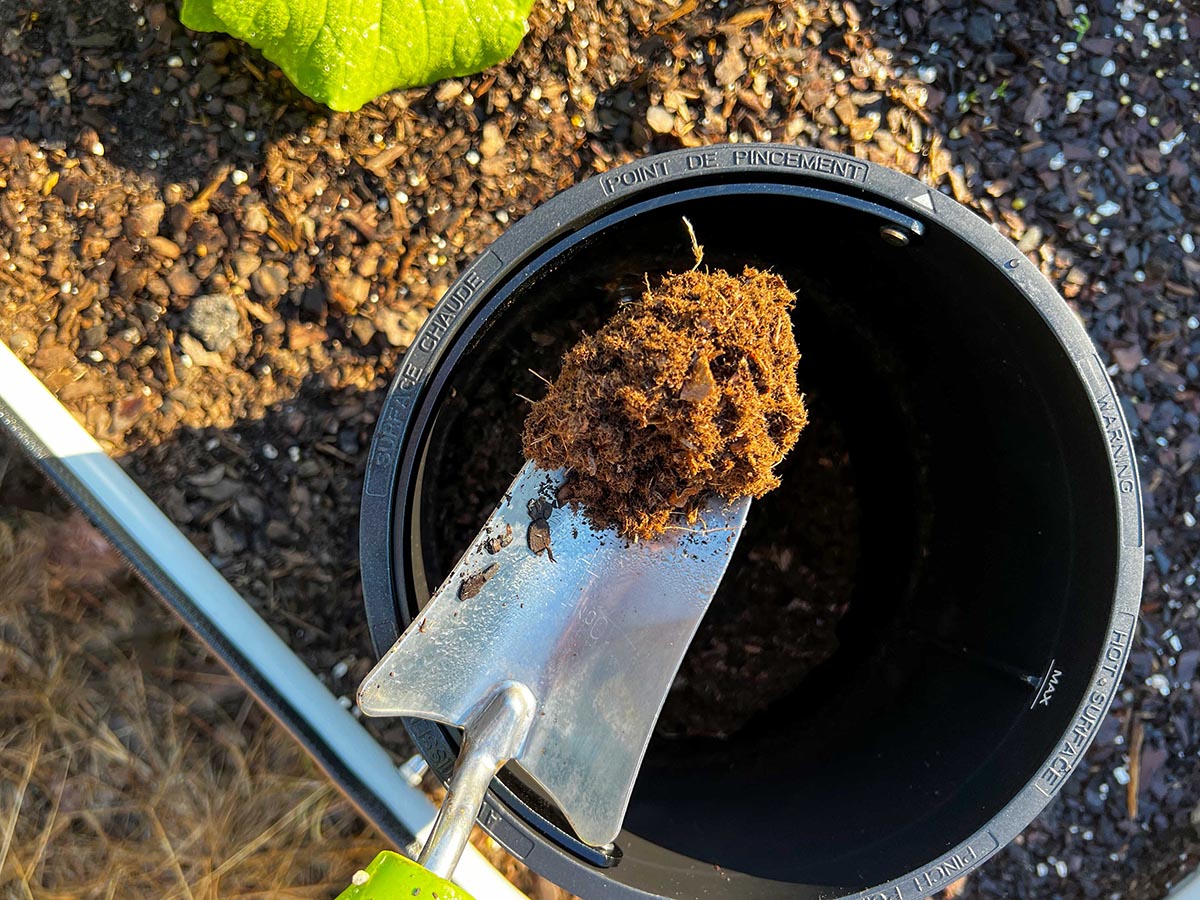
Yes, but follow the manufacturer’s instructions for mixing with soil. Generally, the ratio is one part dehydrated food scraps to 10 parts soil.
Compost machines speed up the natural composting process through various means, such as dehydrating, grinding, and aerating food waste and other organic material. They don’t create real compost, but they create a bio-rich soil amendment while reducing household food waste.
Electric composters can take anywhere from a couple of hours to a few weeks to complete a cycle.
Electric composters are eco-friendly as they reduce food waste and produce nutrient-rich soil additives. They do use electricity, which may mildly increase their overall environmental impact.
Most electric composter manufacturers do not recommend adding tough, fibrous vegetables like corn cobs and large root vegetables, as some composters may not break these down efficiently.
An electronic composter is worth it for those who want to reduce food waste, produce nutrient-rich soil, and promote sustainability, especially for users who enjoy gardening or want to minimize landfill waste.
Meet the Tester
Debbie Wolfe is a photographer, author, and home gardener who tests budget-friendly appliances and tech. An avid composter, she seeks to reduce garden waste efficiently.
Additional research provided by Jenn Ryan.

I Made This One Smart Investment to Ensure My Plumbing and Appliances Last Longer
