


We may earn revenue from the products available on this page and participate in affiliate programs. Learn More ›
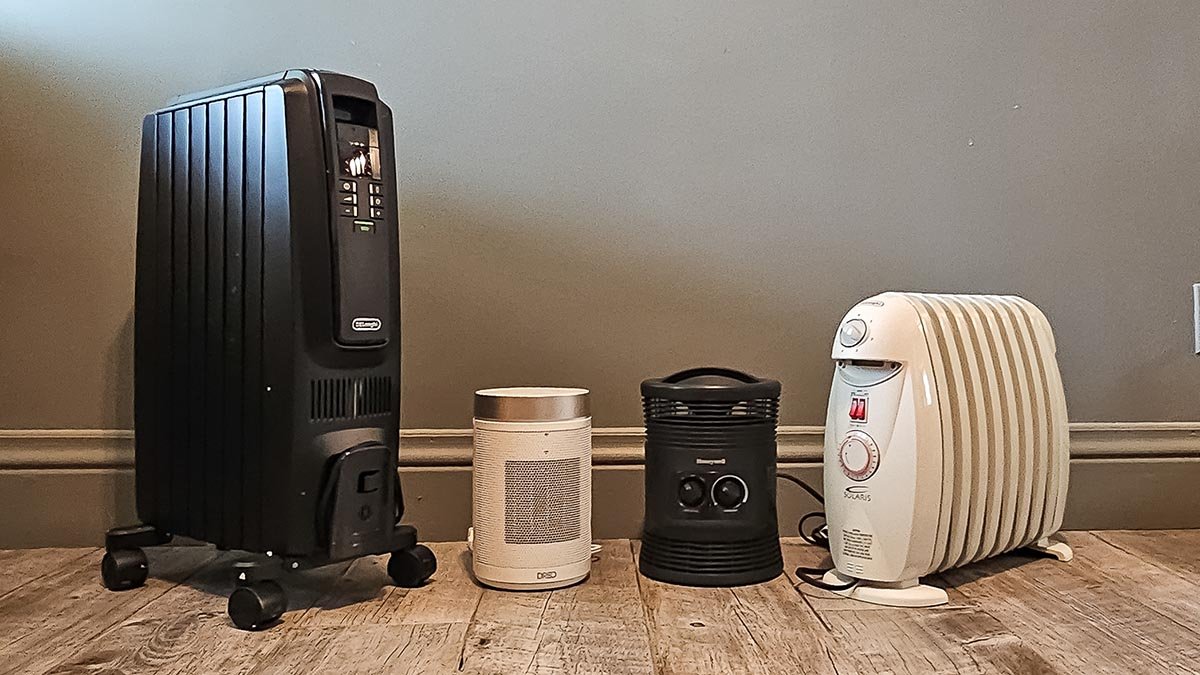
Using an electric heater is one of the simplest ways to warm up a chilly bedroom, office, or garage without turning up the whole-house thermostat. To find out which models truly excel, we tested 13 heaters and evaluated them for ease of use, heating performance, portability, noise, and value.
A reliable electric heater can make a big difference in comfort and energy efficiency. The right choice offers steady warmth, built-in safety features, and the portability to move between rooms. But as is often the case with heating and cooling appliances, there are so many viable options on the market. As such, it pays to focus on models that strike the right balance between power, quiet operation, and user-friendly controls.
Our top recommendation is the Dreo Solaris H3 Slim Space Heater, which stood out in our hands-on testing for its slim design, impressive heating ability, and overall ease of use. Whether you need a compact unit for a home office or an energy-efficient heater for a larger space, this heater is designed to deliver consistent comfort. Keep reading for details on this model, along with our full test results from the rest of the best electric heaters we tested.
- BEST OVERALL: Dreo Solaris H3 Slim Space Heater
↓ Jump to Review - BEST BANG FOR THE BUCK: Dreo Atom 316 Space Heater
↓ Jump to Review - BEST WITH FAN: Lasko All-Season Hybrid Tower Fan and Space Heater
↓ Jump to Review - BEST ELECTRIC FIREPLACE: Maxhonor Electric Fireplace Heater With Remote
↓ Jump to Review - BEST WALL-MOUNTED: Heat Storm HS-1500-PHX Wi-Fi Infrared Heater
↓ Jump to Review - BEST RADIATOR: DeLonghi Dragon Digital Full Room Radiant Heater
↓ Jump to Review - BEST BATHROOM-SAFE: DeLonghi TRN0812T Bathroom-Safe 1200W Radiant Heater
↓ Jump to Review - BEST HALO HEAT: Honeywell HHF360 360-Degree Surround Heater
↓ Jump to Review
Electric Heaters Comparison
Our Top Picks
These recommended electric heaters were selected for their quality and price, with an eye toward the important considerations outlined at the bottom of this guide.
Best Overall
Photo: Amazon
What We Like
- 4 heat settings, programmable thermostat, and fan-only operation
- Unmatched 70-degree oscillation
- Super quiet at just 37.5 decibels
What We Don’t Like
- Controls are a little less intuitive to use than on other models
Product Specs
-
Type:
Ceramic -
Maximum heat output:
1,500 watts -
Compatible square footage:
200 square feet
Our Ratings: Ease of Use 4.5/5; Performance 5/5; Portability 5/5; Noise 5/5; Value 4.7/5
When you set out to test a bunch of electric heaters and end up using the same one over and over after your tests are done, giving it the award for Best Overall is a pretty easy decision. Still, our quantifiable results back up our opinion, as this slim and small electric heater from Dreo earned nearly perfect marks in all categories. It weighs under 5 pounds and is only 15.8 inches tall by 5.9 inches in diameter, yet it had no problem warming up spaces well beyond its 200-square-foot recommended coverage area. It’s also whisper-quiet, competitively priced, and incredibly user-friendly. It has four heat settings, a programmable thermostat, and a fan-only option.
It’s also an attractive little heater. Though that’s certainly not the most important aspect of choosing a supplemental appliance, we appreciate that it’s not an eyesore. The heater and fan combo comes in black and gold or black and silver and features a digital display. It doesn’t offer integrated cord storage, but it does offer the option of running the heater without setting a thermostat temperature. This ceramic heater also kept a good amount of moisture in the air, reducing humidity levels less than all other heaters we tested over 3 hours.
What our tester says: “This is my favorite electric heater of all the options I tested. I keep it by my desk for chilly mornings, and it warms my toes without taking up much space. Though I love its tall and narrow design, I’m glad it shuts off when it tips over. My dogs seem to have a special ability to run right into it when they come running in to say hi.” —Michelle Larson, Product Reviews tester and writer
Get the Dreo Solaris H3 electric heater at Amazon, Walmart, or Dreo.
Best Bang for the Buck
Photo: Amazon
What We Like
- Compact and portable
- Quiet operation even on high setting
- Thermostat mode saves power
- Affordable portable heater
Product Specs
-
Type:
Ceramic fan -
Maximum heat output:
1,500W -
Compatible square footage:
200 square feet
Our Ratings: Ease of Use 5/5; Performance 4.5/5; Portability 5/5; Noise 4.5/5; Value 5/5
We didn’t expect much from the Dreo Atom 316 at first glance; it’s so compact that we thought it would struggle to warm anything more than a small corner. But after using it for several hours at a time during the testing phase, we were pleasantly surprised at how well it heats a modest-size room. The Eco thermostat mode is particularly useful: it ramps up to full heat, then dials back once the set temperature is reached, helping to avoid overheating or wasting energy.
One of our favorite things is how quiet it stays—even on higher settings, the noise never becomes intrusive, which meant we were able to watch TV at a normal volume and converse without straining to be heard. The built-in timer and memory function are handy. However, the touch-button controls are almost invisible in normal light, so tweaking the settings can be a bit fiddly. We decided that using the remote was the best way to adjust the heater.
The safety features are great. The tip-over and overheat cutoffs, along with a child lock, all functioned well in testing. But be prepared: the heat delivery is gentle and slow, so don’t expect a blast of hot air. Also, it lacks any smart/Wi-Fi features, so scheduling or remote control beyond the built-in timer is not possible. Still, it punches above its class. We think it’s an especially good pick if your space is small and you don’t need advanced features.
Get the Dreo Atom 316 space heater at Amazon, The Home Depot, or Walmart.
Best with Fan
Photo: Amazon
What We Like
- Good year-round all-in-one heater/fan option
- Taller height distributes warmth across the body
- Stays completely cool to the touch during use
What We Don’t Like
- Height makes it a little awkward to carry
- Slow to heat open spaces
Product Specs
-
Type:
Ceramic -
Maximum heat output:
1,500 watts -
Compatible square footage:
300 square feet
Our Ratings: Ease of Use 5/5; Performance 4.5/5; Portability 4/5; Noise 5/5; Value 4.3/5
For those looking for a year-round supplemental cooling and heating system, this Lasko ceramic space heater and tower fan is an excellent option. Though many electric heaters offer fan-only operation for use in any season, we think the height of this model (just over 3 feet tall) makes it better suited for summer than others that sit low to the ground.
At first, we actually wanted to ding this model for being so tall since that makes it a bit awkward to move from room to room. But when sitting at our desks or lying in bed, it was nice to have this bedroom space heater’s heat up high so we could feel it across our entire bodies. This will certainly also be true next August when we’re desperate to feel a cool breeze across our arms and faces.
Initially, it appeared that only one length of the fan/heater combo’s substantial height functions at a time. When you turn on the heat, it comes from the left side, and when you turn on the fan, cool air comes from the right. When we ticked down the thermostat from 79 to 70 degrees Fahrenheit, however, the heater automatically set its output to low and kicked on the fan, allowing both sides to work toward reaching the new set temperature.
Beyond that, the tower fan’s controls are intuitive to use, and the entire appliance stays completely cool to the touch, even on its highest heat setting. In the end, the only real downside to this model is that it took a bit longer than other 1,500-watt heaters we tested to warm up a large open room.
What our tester says: “This heater is exactly why we test. It’s a Lasko, so I expected to love it. But then, during testing, I found features I really didn’t like—at first, that is. Once I got into using it, everything about the Lasko made sense and made me want to keep it accessible year-round.” —Michelle Larson, Product Reviews tester and writer
Get the Lasko electric heater at Walmart or Amazon (white).
Best Electric Fireplace
Photo: Amazon
What We Like
- Attractive and efficient warming
- Glass panel stays cool to the touch during use
- Works via touch screen or included remote
What We Don’t Like
- Complicated to recess while maintaining cord’s outlet access
Product Specs
-
Type:
Ceramic -
Maximum heat output:
1,500 watts -
Compatible square footage:
400 square feet
Our Ratings: Ease of Use 4.5/5; Performance 4/5; Portability 4/5; Noise 4/5; Value 4.5/5
You may be asking yourself if an attractive fireplace heater will be as effective at warming up a room as a more utilitarian-looking option. We had the same question, and our testing revealed the answer: almost! Though the Maxhonor’s 1500-watt output raised the temperature of our test room by slightly fewer degrees than some of our other picks, we think it’s worth sacrificing some of that power to produce mesmerizing dancing flames.
Though we didn’t install this heater into our wall, doing so would add to the fireplace’s ambiance even more. Just remember that you’ll need to plan for the 6-foot cord to reach an outlet, as extension cords should not be used with space heaters due to increased fire risk. To keep installation a bit easier, you can also surface mount this electric fireplace on the wall, though we tested ours by simply setting it on the floor. No matter where you place it, the blue, green, or red/orange flames it produces look like actual fire, yet its glass screen remains safely cool to the touch. The unit is easy to control via its built-in touch panel or the included remote control. It also has a sleep timer so that you can fall asleep watching the fire any time you feel like it.
Get the Maxhonor electric heater at Amazon.
Best Wall-Mounted
Photo: Amazon
What We Like
- App lets users control the heater from smartphone
- Infrared technology heats incredibly quickly
- Stays cool to touch, even on highest setting
What We Don’t Like
- Mounting holes are too close together for studs
Product Specs
-
Type:
Infrared -
Maximum heat output:
1,500W -
Compatible square footage:
Up to 150 square feet
Our Ratings: Ease of Use 4/5; Performance 5/5; Portability 4/5; Noise 4.5/5; Value 4/5
This wall-mounted Heat Storm heater provides continuous heat for spaces up to 150 square feet without taking up any floor space. Since we knew we wouldn’t need to hardwire it into our electrical system, we expected it to be easy to install—however, we ran into a slight problem. While wall studs are typically 16 inches apart, this unit’s mounting holes are only 13.75 inches apart. That meant we could only insert one screw into a stud, and we had to use a drywall anchor for the other. Since the heater only weighs about 8.5 pounds, it probably would have been okay to mount it directly to the drywall, but we really didn’t want to see it come crashing down.
Once we had it mounted, however, this Wi-Fi heater was easy to use via its included remote or the Smart Life app. With the app, we measured the room’s temperature, turned on the electric heater, and set its thermostat to 72 degrees Fahrenheit. In just 18 minutes, the temperature in the space increased by 5 degrees and the heater switched off.
Those who would rather not mount the Heat Storm (and who don’t care about pairing it with their Wi-Fi to operate it via app) might prefer the Heat Storm HS-1500-PHX, which comes with attachable feet for use on the floor. Both versions stay cool to the touch and feature overheating protection should the appliance become too warm during operation.
Get the Heat Storm electric heater at Amazon, Lowe’s, The Home Depot, Walmart, or Northern Tool + Equipment.
Best Radiator
Photo: Amazon
What We Like
- Virtually silent operation
- Consistent gentle heat
- Castor wheels for mobility
What We Don’t Like
- Display isn’t super bright
- No remote control
Product Specs
-
Type:
Oil-filled radiator -
Maximum heat output:
1,500W -
Compatible square footage:
About 300 square feet
Our Ratings: Ease of Use 5/5; Performance 4.5/5; Portability 4.5/5; Noise 5/5; Value 4.8/5
The DeLonghi Dragon Digital is a solid and sturdy heater, weighing around 28 pounds. After plugging it in and letting it warm up, what impressed us the most was how quietly it runs. There’s no fan noise; as with most oil-filled electric heaters, we only heard gentle clicks as the thermostat cycled, which is perfect for late-night use and quiet rooms. Aside from the quiet, occasional clicking, it was completely silent.
It warmed our space gradually but steadily. This isn’t the type of heater that blasts hot air instantly—it takes about 10 minutes to heat up, and then it radiates warmth without drying out the air in the room like other heaters can. The digital controls and 24-hour timer are intuitive and handy. We especially liked the Eco/energy mode, which helps reduce excess energy use by modulating power based on the ambient temperature in the room.
It is worth nothing that adjusting the settings in bright light can be challenging because the display isn’t very bright. Also, this beast is no lightweight; rolling it on its casters is fine, but carrying it up the stairs was a chore. There was a faint smell during the first-use burn-in phase, but that cleared within a few hours.
Overall, for a small to midsize room, the Dragon is quiet, reliable, and safe. It’s a heater you can leave on overnight without worry.
Get the DeLonghi Dragon electric heater at Amazon, Best Buy, or Wayfair.
Best Bathroom-Safe
Photo: Amazon
What We Like
- Quiet, fanless operation
- GFI plug for added safety
- Quiet radiator electric heater
- Electric heater with thermostat control
What We Don’t Like
- No remote control
- Limited heating for large rooms
Product Specs
-
Type:
Oil-filled radiator -
Maximum heat output:
1,200W -
Compatible square footage:
200 square feet
Our Ratings: Ease of Use 5/5; Performance 4.5/5; Portability 4.5/5; Noise 5/5; Value 4.8/5
For a radiator, this compact DeLonghi is surprisingly compact, standing just under 15 inches tall. We were pleased by how quietly it warms; because there’s no fan, it’s almost silent. We heard only the soft click of the thermostat cycling. Over the course of about an hour, the room started to feel noticeably cozier without generating almost any sound. It produces heat slowly, but once it reaches the desired temp, it continues to radiate soothing warmth.
We liked the flexibility of the three power levels, plus the thermostat dial made it easy to select the desired heat level. The 24-hour timer is a nice touch, as it allows for scheduling so that the chilly bathroom can be warm when you wake up. The safety features include an overheat cutoff, tip-over switch, and, like other electric bathroom heaters, a ground fault interrupter (GFI) plug, making this unit suitable even for more moisture-prone spaces like bathrooms or laundry centers.
On the downside, it’s not a heater for rapid warming. If you want a direct, forceful stream of hot air, this won’t deliver it. The wheels are basic snap-in types, so moving it over thresholds or thick rugs is a little clunky. In testing, it did a solid job warming a small room, but in larger rooms it felt underpowered. Overall, it’s a dependable, quiet heater that’s safer to use in bathrooms than most other models.
Get the DeLonghi TRN0812T electric heater at Tractor Supply Co., The Home Depot, or Wayfair.
Best Halo Heat
Photo: Amazon
What We Like
- Compact and lightweight
- Full halo (360 degrees) of heat
- Simple controls with thermostat
What We Don’t Like
- No remote or oscillation
- Not meant for large rooms
Product Specs
-
Type:
Fan-forced -
Maximum heat output:
1,500W -
Compatible square footage:
Small to mid-sized rooms
Our Ratings: Ease of Use 5/5; Performance 4.3/5; Portability 5/5; Noise 4.5/5; Value 4.5/5
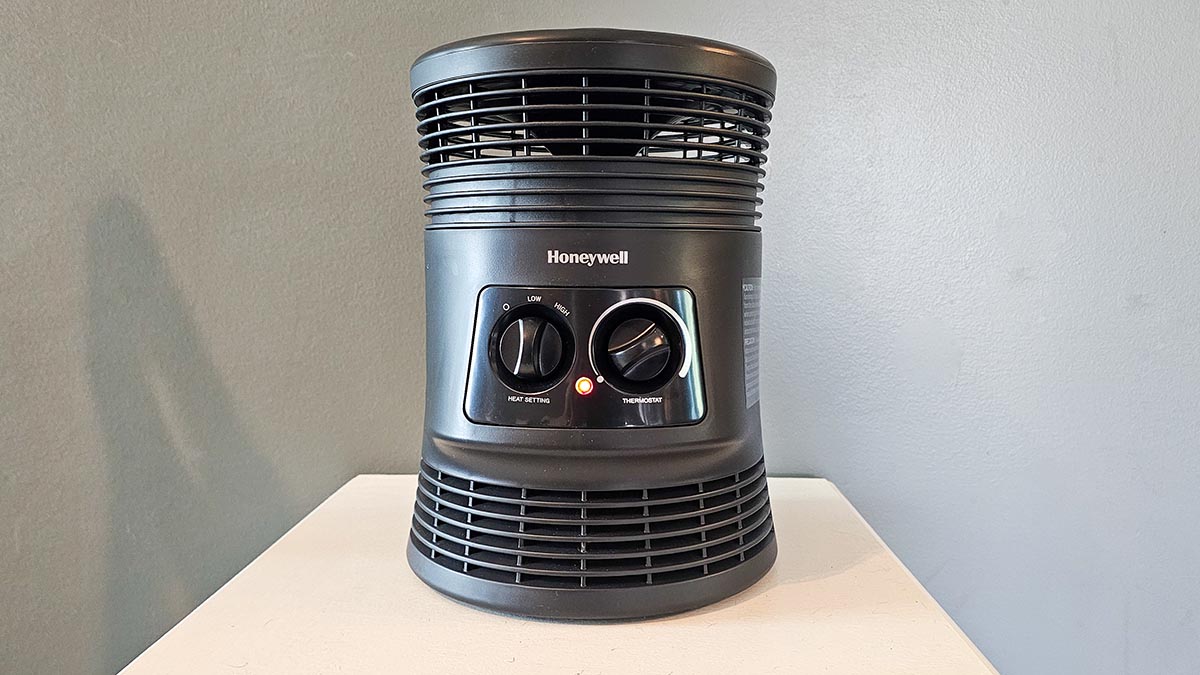
When we unboxed the Honeywell, we were expecting a small spot heater for personal use,and that’s pretty much what we got. Right out of the box, this little heater felt solid and well-made. We placed it in the center of the room, turned it to high, and within just a few minutes, the air felt noticeably warmer.
We really liked its surround output, which blows heat in all directions so that there’s no one-directional blast, so there’s no need for oscillation. The controls are simple: two heat settings plus a thermostat dial. The safety features are standard, including tip-over shutoff, overheat protection, and a cool-touch handle. All this is exactly what we want in a portable unit that we’ll likely move around.
Of course, there are tradeoffs. It’s not a heater designed to warm up a large room. When we tried it in a 200-square-foot area, the heating effect was only mild. The fan is audible in a very quiet setting, but tolerable. We think the Honeywell heater is ideal for a personal or “nearby zone” heater—very handy for keeping one spot cozy without turning up the central heat.
Get the Honeywell electric heater at Amazon, Walmart, or Target.
How We Tested the Best Electric Heaters
| Testing Stats | |
| Products tested | 13 |
| Time spent testing | 8 weeks |
| Tests performed | 7 |
| Price range | $30 to $350 |
We began by researching popular electric heater models and selecting high-rated units based on type, output, coverage, safety, and extra features. Our top-scoring picks include ceramic, infrared, radiator, and fan-forced models, many with multiple heat settings and programmable thermostats.
Over 3 weeks, we tested 13 heaters hands-on, rating them for ease of use, performance, portability, noise, and value. We timed how long each heater took to raise a room’s temperature by 6 degrees Fahrenheit in both small and large spaces, and we noted any effect on humidity.
We also tested portability and any extra features. We paid attention to noise levels, noting whether the sound was soothing white noise or a distracting hum. For safety, we tipped each heater to check its tip-over protection and compared the built-in thermostats with external thermometers for accuracy. We scored each model using a rubric and averaged the results to identify the best overall heater and highlight others according to their best uses.
What to Consider When Choosing an Electric Heater
When choosing the best electric heater for your home, the following list of considerations should help you narrow down your search.
Types of Electric Heaters
Electric heaters are available in multiple styles, including fan, infrared, baseboard, panel, and electric fireplaces. Chosen correctly, they can be a valuable part of a low-cost electric heating system.
Electric Fan Heaters
Electric fan heaters are also called fan-forced heaters because they use an electric heating element to heat the surrounding air rapidly, which is then forced out of the heater by a fan. The fan is located at the back of the heater, which allows it to push the air in a single direction. The heated air gradually warms the ambient temperature of the room.
Since this style of electric heater takes time to heat up, these are best used as space heaters in smaller rooms and workspaces where the increase in heat will be more noticeable. Electric fan heaters are one of the more affordable types available.
Electric Infrared Heaters
Electric infrared heaters are also known as radiant or quartz heaters. They generate radiant infrared heat and can be used for large rooms as well as small spaces, and come in several different styles, including oil-filled and electric radiators. These heaters provide a higher heat intensity when compared to fan-forced electric heaters.
However, the heat generated by infrared heaters does not warm the air within the space. Rather, infrared heaters use infrared waves to warm physical objects, like a person or vehicle. This means that while users will feel warm with the heater on, the ambient air will not change temperature. When the heater is switched off, the temperature of the objects and people in the room may drop depending on the temperature in the home. This feature makes electric infrared heaters great garage heaters or enclosed patio heaters, where trying to heat the cold air would be a waste of energy.
Electric Baseboard Heaters
Electric baseboard heaters are one of the more basic styles of whole-home heating. When installed in a room or living space, these heaters can be adjusted with a temperature dial. They can also be portable, with a stand and a regular power cord.
When the element within the baseboard heater is turned on, it heats the air around it. The heated air expands and lifts into the air, moving away from the floor and allowing more cold air to circulate to the exposed elements. While a baseboard heater can be a low-cost electric heating system in terms of the initial purchase price, the exclusive use of baseboard heaters can be one of the causes of a high electric bill.
Electric Panel Heaters
Electrical panel heaters typically use infrared heating technology to provide heat to the people in the room without heating the air within the room. The difference is that these heaters are designed to be completely flat so that users can mount them on the wall like a poster or picture frame.
They can also be ceiling-mounted, allowing them to warm the entire room without objects obstructing the flow of infrared heating. If users don’t want to mount the electric panel heater, they can just stand it up on the floor or desk to keep warm throughout the day. Panel heaters come in a range of sizes, so users can customize the heater to fit the size of the space.
Electric Fireplace Heaters
This style of indoor electric heater gives users the style of a fireplace and the safety of an electric heater. Electric fireplaces typically have a traditional decorative appearance with a light effect designed to mimic the flickering flames of a classic fireplace.
These fireplace heaters may use infrared radiant heating or fan-forced heating, although infrared is the most commonly seen style. Electric fireplace heaters are a great option for a den, living room, or dining room, where they can heat the entire space while accenting interior decorating choices.
Room Size
Before choosing an electric heater, measure the size of the room to ensure you choose a model with enough power for your square footage. Smaller rooms, like bedrooms and home offices, can usually be heated relatively easily with any type of electric heater. A heater for large rooms, like the living room, dining room, kitchen, or basement, will need to be a more powerful heater, such as a baseboard heater, electric fireplace, or fan-forced heater.
Power
Once you’ve determined the size of the room that needs heating, you’ll be able to determine how much power you need. Generally speaking, every 10 watts of output heats 1 square foot of space. This means a 1,000-watt heater should be sufficient for a 100-square-foot room. However, if you’re also heating that room with a furnace and supplementing with the electric heater, you may be able to get away with an even smaller electric heater—or you can consider an electric heater with blower capabilities for faster, more even heat distribution.
While some electric heaters can run on batteries, most will need to be plugged into an outlet. Some high-capacity options may need to be hardwired into your home’s 120-volt electrical system or even require a hardwired 240-volt connection.
Heating Features
Though some baseboard heaters come without a thermostat, most electric heaters aren’t merely heating elements. Many models have programmable or adjustable thermostats that feature a variety of heat settings and have oscillation control.
- Programmable thermostats allow users to set a specific temperature for the heater and a heating schedule that responds to increased or decreased needs.
- Operate adjustable thermostats with the touch of a button or the turn of a dial to adjust the current desired temperature. Unless they are programmable, you’ll have to make those changes manually.
- Most electric heaters offer up to four heat settings so that you can adjust output according to the size of the room, the current temperature, or proximity to the heater.
- Oscillation helps distribute heated air and infrared heating to a much wider area. Different models will have different degrees of oscillation, so be sure to check your product’s specifications when considering a specific heater.
- Remote controls make it easier to operate an electric heater without the need to walk over to it. Not only is this convenient, but it can also be an important accessibility factor for a wall- or ceiling-mounted heater.
Energy Efficiency
One main benefit of adding an electric heater to a home is that there’s no need to turn up the temperature in the entire house just to heat one small space. This lets you relax at your preferred temperature while saving money on your heating bill. However, consider looking for a model specifically labeled as an energy-efficient heater to ensure you’re conserving as much energy and hard-earned money as possible.
Another way to save energy is to consider the room’s size and the heater’s output to select a product appropriate for the space. The most efficient electric heaters will come with a programmable thermostat, energy-saving mode, and a simple timer.
Safety Features
Safety is a factor when using all types of heating systems, and electrical heaters are no exception. For this reason, many heaters have built-in safety features like cool-touch exteriors, tip-over protection, and overheating protection. Users can also look for the UL certification, which indicates a heater has undergone extensive testing to confirm its safety and reliability.
- Cool-touch exteriors are typically made of fiberglass or plastic that is safe to the touch. Because of this, they are great options for wall-mounted and portable electric heaters because they are often used in locations where passersby may come into contact with them.
- Tip-over mechanisms protect heaters from starting a fire if they fall over. The impact of being knocked over activates this safety feature, which turns off the heater to prevent it from igniting nearby items, such as carpeting or curtains.
- Overheating protection keeps the electric heater from burning out if it becomes too hot. This feature detects the heater’s rising temperature and shuts it down to prevent external damage to the room or any flammable objects and internal damage to the heater.
Portability
Some electric heaters are fixed units that are installed in the ceiling or walls. Semiportable units typically sit in one place but can be moved with some effort, and fully portable heaters (sometimes referred to as personal heaters) are lightweight and typically have features that make them easier to move, such as a compact size, wheels, or a built-in handle.
Electric heaters can range from industrial units that weigh more than 100 pounds to small desktop heaters that users can hold in one hand. The smaller a heater is, the more portable it tends to be, but larger electric heaters can use a set of wheels to achieve similar portability. These electric heaters may also have a built-in handle that helps lift, support, or pull the heater from place to place.
Noise Level
The noise level produced by an electric heater is typically no louder than that of a portable fan or the forced airflow from a furnace. However, if noise is a concern, users should avoid fan-forced electric heaters, as the fan they rely on to push heated air out into the room can greatly increase the amount of noise the heater produces. For a more silent operation in the home, use a fireplace heater, an infrared heater, a panel heater, or a baseboard heater, all of which are capable of operating without a fan.
FAQs
Electric space heaters are suitable for warming a space in winter without adding excess energy costs. In fact, the cost to run a space heater is usually relatively low. Read on to find the answers to some commonly asked questions about these efficient space warmers.
Electric heaters don’t need ventilation because they don’t burn fuel, so they don’t give off a combustion byproduct that would require ventilation. Thus, they are suitable for both indoor and outdoor use.
It’s not a good idea to sleep with your electric heater on, even if it has an automatic shutoff function, as safety features can sometimes fail. And even if you’re willing to take the risk, you might not enjoy the other side effects of sleeping with the electric heater on. For example, it can significantly dry out the air, causing you to wake up with a dry mouth, a headache, or a feeling of dehydration.
An electric room heater won’t reduce the oxygen in your home, though extended use could cause the air to become dry, making it feel as though it is more difficult to breathe.
No, electric heaters don’t give off carbon monoxide (CO). CO is only produced by fuel-burning non-electric heaters and appliances.
The electric heaters in this guide produce between about 2,550 British thermal units (BTUs) and 17,050 BTUs to accommodate rooms ranging from 100 to 1,000 square feet. The BTUs of the electric heater you choose will depend on your room size and heating requirements. Electric heaters for large rooms or electric garage heaters typically require more BTUs.
The best place to put an electric heater will depend on the heater itself and your individual needs. Generally speaking, they should be positioned within approximately 6 feet of an electrical outlet and kept away from any potential exposure to water. Also they should be clear of curtains, fabrics, and other flammable materials, and if they’re not cool-touch, away from animals. Some users may want to tuck one under their desk to warm their feet, while others may prefer an in-wall electric heater that’s more permanent.
Meet the Testers
Michelle Larson has been a writer and editor for more than 10 years in the fields of health, business, and the home. After living in the windy plains of South Dakota and on top of a mountain in Utah for much of her life, she knows plenty about using an electric heater to stay warm.
Glenda Taylor is a contractor and product tester who writes detailed, hands-on reviews of tools and appliances to give Bob Vila readers clear, trustworthy guidance.
Additional research provided by Timothy Dale.
Shop Our Favorite Prime Day Deals
