


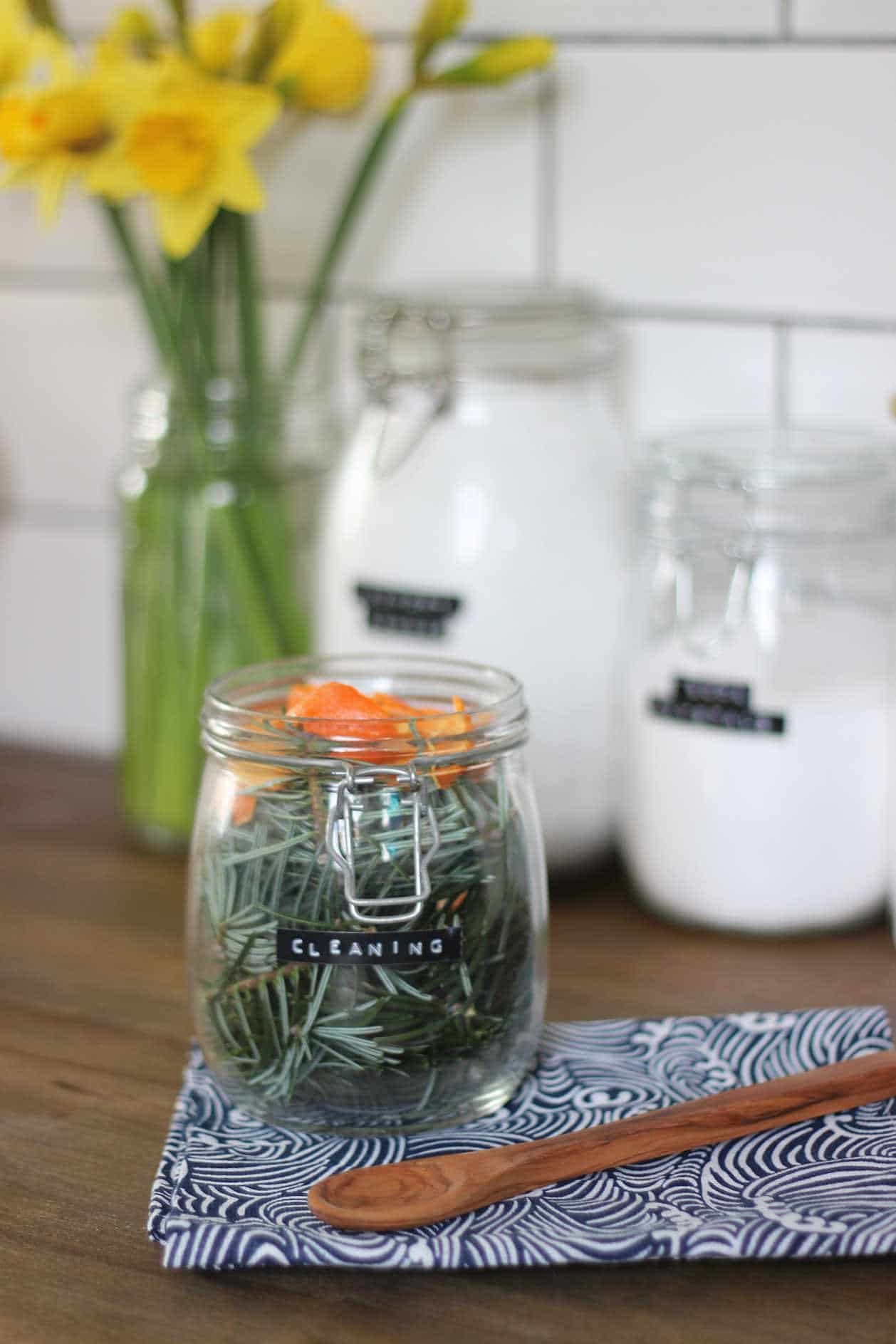
Wondering how to make fresh-smelling pine-infused vinegar for cleaning? Read on for my full how-to.
I love making my own cleaning sprays. I quite often make my own herb-infused vinegar for cleaning before, but I’ve never made any with pine.
I really love the smell of pine, though. It’s a fresh smell I associate with cleaning, and as such, I quite often use pine essential oil in my homemade cleaning products. However, I’ve never had any fresh pine to hand to try it out in my cleaning products.
And then recently I was walking in my local country park, and I noticed a load of pine branches on the ground. I wasn’t sure if some trees had been felled or whether strong winds had knocked the branches off.
Either way, I picked up a couple of small branches that were lying on the ground and decided it was time to make pine-infused vinegar. I was so pleased with the results that I wanted to show you how to make it too. Sharing is caring after all!
At this time of year, you might even have some pine to hand from your Christmas tree!
Like any infused vinegar, it’s incredibly easy to make. Here’s the full how-to, so you can make it too!
How To Make Pine-Infused Vinegar For Cleaning

Ready to get cleaning with fresh pine? Here’s the full list of ingredients and how to make it:
You Will Need
To make pine-infused vinegar, you will need:
- A few pine branches – just enough to fill your jar
- White spirit vinegar – here’s where to buy white vinegar in the UK
- Optional – orange, lemon, grapefruit, or lime peel (these can be stored in the freezer, and added when needed, they don’t need to be defrosted first)
Equipment Required
Method
- Gather your pine branches. Then give them a shake to remove any bugs and beasties that might be residing in the branches.
- Next, pop the pine branches into your jar. You may need to cut them into smaller sections using scissors if your branches are too long.
- If you have any citrus peel, feel free to add it too for an extra fresh scent burst.
- Next, pour in your vinegar until it reaches the top. Your branches and peel, if you added any, should be submerged.
- Pop the lid on, and let the ingredients infuse for at least two weeks in a cool, dark place. The cupboard under your kitchen sink is an ideal place for this. Two weeks would be the bare minimum. For stronger pine-scented vinegar, leave the pine steeping for longer. I’ve left herbs and citrus infusing for as much as six months for stronger-smelling infused vinegar.
- Once you’ve finished infusing your vinegar, use a colander or sieve and strain the mixture into a measuring jug. Place the pine branches (and citrus peel, if you used it) into your compost bin.
- Next, fill your clean, dry spray bottle halfway with the pine-infused vinegar. Then top the bottle up with cooled boiled water, so that it’s a 50:50 vinegar/water mix. Pop any unused vinegar back in your jar, and pop the lid on.
- Label your spray bottle and the unused infused vinegar, and store both out of the reach of children and pets. You’re now good to go!
Directions For Use

This cleaning vinegar is super easy to use. All you need to do is spray a cloth, and then you can get wiping, for a home that will smell forest fresh!
However, do note that there are a few applications that vinegar is not suitable for use.
White vinegar isn’t suitable for cleaning natural stone, granite, marble, quartz, or similar. This is because vinegar can be corrosive to these materials and may etch the surface. Metallic paint is another no-no. So, avoid using vinegar-based cleaners to clean your car.
Another big no-no is that you should never mix your cleaner with other cleaning products that contain bleach or hydrogen peroxide. Doing so can release poisonous gases that can seriously harm your airways.
I would always recommend reading my guide on everything you need to know about cleaning with white vinegar, as it talks you through all these points and more.
You can also read my post on why you should never mix vinegar with bleach – and what to do in case you have accidentally mixed the two.
Shelf Life
Any unused and undiluted vinegar will last indefinitely. When made with cooled boiled water, your cleaning spray will have a shelf life of around 6 to 8 weeks. If you use water straight from the tap, the shelf life is considerably less, so I would always recommend boiling and cooling your water first.
Why This Cleaner Works
Pine is a great addition to homemade cleaning products, and not just because it smells so good.
Pine needles contain a substance called terpene, which actively breaks down grease and grime. This makes it especially useful for cleaning kitchen surfaces, hobs, and other areas prone to oily buildup.
Meanwhile, white vinegar is a brilliant non-toxic cleaner due to its acidity. It’s this acidity that dissolves mineral deposits, grease, and dirt with ease.
Is Pine-Infused Vinegar Pet Safe?
I have read conflicting reports on whether pine is toxic to cats or not. From what I have read, pine trees are not toxic to cats or dogs, although pine needles can cause oral irritation if eaten. However, pine essential oil is toxic to cats and dogs.
My thoughts are that infusing pine in vinegar means the pine is diluted to a concentration that shouldn’t harm your pets. Especially so when you add water to make your cleaning spray. However, if you have pets, then I would encourage you to carry out your own research to decide if using this cleaner is the right option for you.
If you do make the cleaner, make sure your jar is kept sealed and away from pets to avoid ingestion. You may also want to keep your pet away from surfaces that you have cleaned until they are dry to the touch.
Printable Version
Here’s the printable version of this recipe, if you would like to print it out:
1 Clean and dry glass jar with a lid
1 Clean, dry spray bottle
Pair of scissors
Colander or sieve
Measuring jug
- 3 handfuls Pine branches – just enough to fill your jar
- 1 500 ml bottle White spirit vinegar
- 1 handful Optional – orange, lemon, grapefruit or lime peel
Gather your pine branches. Then give them a shake to remove any bugs and beasties that might be residing in the branches.
Next, pop the pine branches into your jar. You may need to cut them into smaller sections using scissors, if your branches are too long.
If you have any citrus peel, feel free to add these too for a extra fresh scent burst.
Next, pour in your vinegar until it reaches the top. Your branches and peel, if you added any, should be submerged.
Pop the lid on, and let the ingredients infuse for at least two weeks in a cool, dark place. The cupboard under your kitchen sink is an ideal place for this. Two weeks would be the bare minimum. For stronger pine scented vinegar, leave the pine steeping for longer. I’ve left herbs and citrus infusing for as much as six months, for stronger smelling infused vinegar.
Once you’ve finished infusing your vinegar, use a colander or sieve, and strain the mixture into a measuring jug. Place the pine branches (and citrus peel, if you used it) into your compost bin.
Next, fill your clean, dry spray bottle halfway with the pine-infused vinegar. Then top the bottle up with cooled boiled water, so that it’s a 50:50 vinegar/water mix. Pop any unused vinegar back in your jar, and pop the lid on.
Label your spray bottle and the unused infused vinegar, and store both out of the reach of children and pets. You’re now good to go!
Spray your cloth with the spray, and you can get wiping, for a home that will smell forest fresh! Do note that not all surfaces are suitable for cleaning with vinegar – avoid using this spray on marble, quartz, granite, stone or similar.
Servings: 2 500 ml bottles
Cost: 1
Sign Up For The Moral Fibres Substack
Get all the latest articles from Moral Fibres straight to your inbox, once a month, free of charge through Substack. You can also upgrade to be a paid Substack subscriber, where you’ll receive an additional two exclusive articles a month. Sign up now:
