


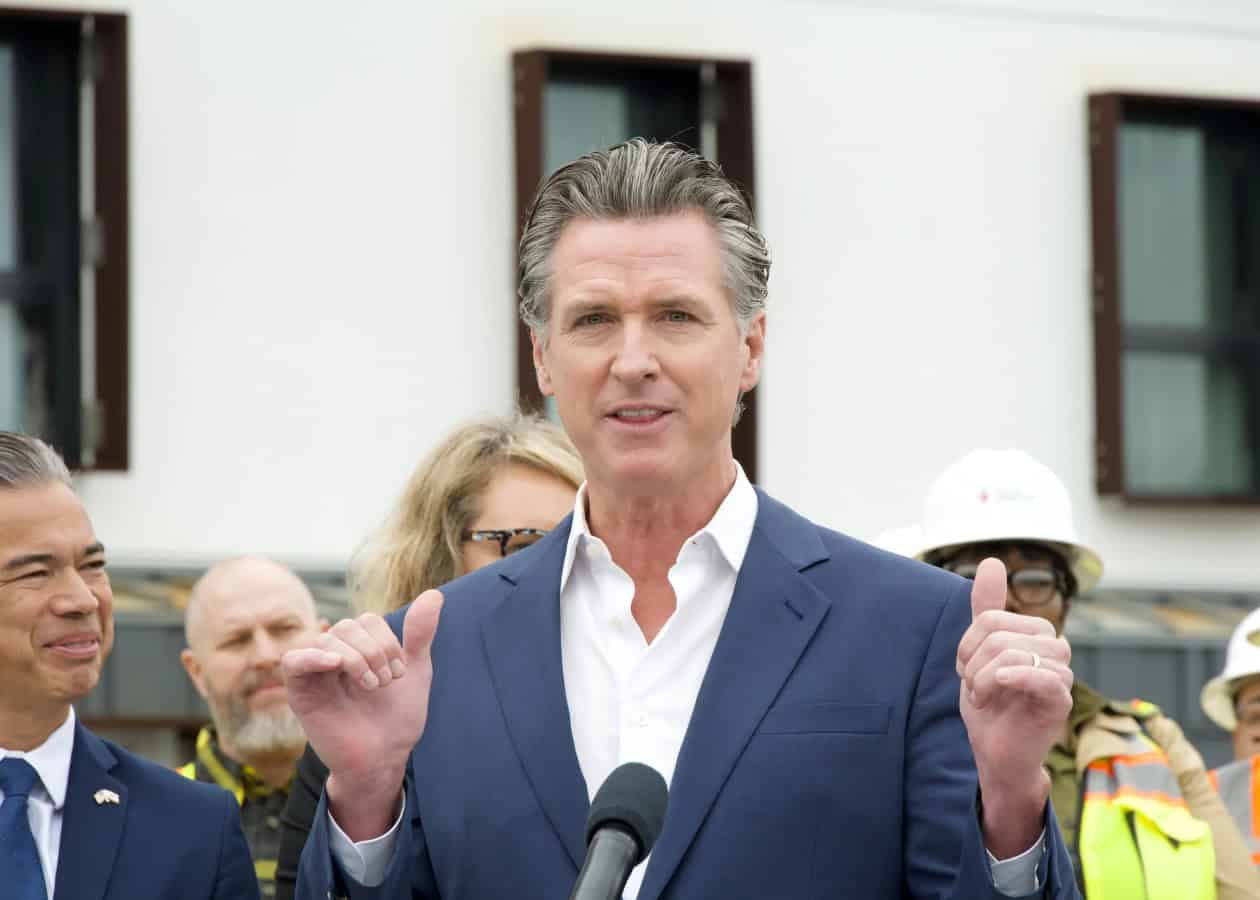
A high-profile effort to lower California’s gas prices by more than $1.15 per gallon has been defeated in Sacramento, leaving millions of drivers facing some of the highest costs in the nation. The proposal’s failure comes as San Jose Mayor Matt Mahan intensifies his calls for an emergency suspension of state fuel taxes, labeling the current affordability crisis a “man-made disaster.” Despite the urgency from local leaders and a $2 gap between California and the national average, state lawmakers recently voted to kill the measure, prioritizing infrastructure funding over immediate relief at the pump.
Assembly Republicans’ $1.15 price-slashing plan fails
The political battle over energy costs reached a breaking point when the Senate Environmental Quality Committee blocked Senate Bill 1035, which was authored by Sen. Tony Strickland (R-Huntington Beach) in an effort to ease pain at the pump.
To provide immediate relief, Strickland proposed a moratorium on four major fuel costs; specifically the state excise tax, various state and local taxes, and the compliance expenses tied to Cap-and-Trade and the Low Carbon Fuel Standard.
“To say I’m disappointed is an understatement,” Strickland said. “We have an opportunity to help working families at a time when we have an affordability crisis. Democrats in Sacramento refused to help struggling Californians.”
Proponents argued the cut was necessary to align California with the rest of the U.S., while opponents dismissed the move as a partisan maneuver.
Democratic leaders label the tax suspension a political “stunt”
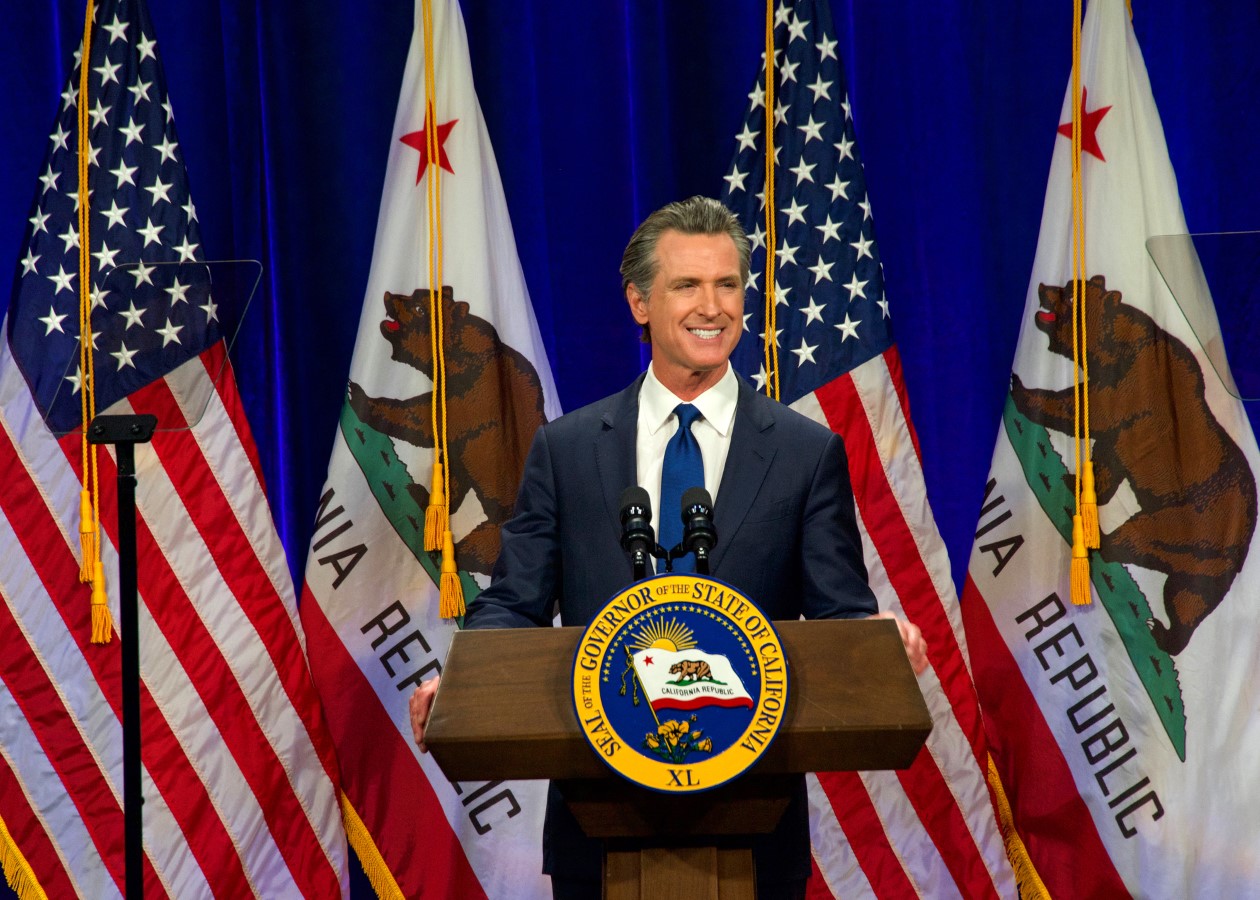
Democratic leadership in Sacramento moved quickly to block the price-slashing proposal, arguing that it would have catastrophic consequences for the state’s budget. Lawmakers who opposed the measure stated that suspending the tax would “gut” approximately $9.5 billion earmarked for road and highway repairs and an additional $3.2 billion for public transit projects. They further expressed skepticism that oil companies would pass the savings to consumers, suggesting a tax holiday might only increase corporate profit margins.
The gas tax, which lawmakers voted to raise in 2017, has risen by 20 cents per gallon since then, to 61 cents, and generates nearly $8 billion a year; the vast majority of state funding for highway and road repairs.
Matt Mahan calls for state leaders to address the “man-made disaster”

San Jose Mayor Matt Mahan has become one of the most prominent voices demanding state intervention. In a series of public appeals, Mahan urged Sacramento to provide immediate relief to families who are “getting crushed at the pump.” Framing the issue as a failure of policy, Mahan remarked, “When a natural disaster hits California, we step up and help. A man-made disaster should be no different.” He has consistently argued that the state’s refusal to pause tax collection is a choice that actively harms working-class residents.
California’s gas taxes and environmental programs already add well over $1 per gallon to the price of fuel, according to a report by the California Energy Commission. The state also faces structural supply constraints, with limited in-state refining capacity and fuel requirements that make imports more expensive.
The massive $2 price gap between California and the rest of the country

The disparity between California’s gas prices and the national average remains one of the most significant economic burdens for residents. While drivers in many other states enjoy prices near $3.00 per gallon, Californians frequently pay well over $5.00. This “California Premium” is a result of the state’s isolated fuel market, which is disconnected from the cheaper pipelines and supply chains that serve the rest of the U.S., leaving the state vulnerable to local supply shocks and high regulatory costs.
A major component of the failed $1.15 reduction plan involved the suspension of fees managed by the California Air Resources Board (CARB). These “hidden taxes” include the state’s cap-and-trade program, which adds approximately 37 cents per gallon, and the Low Carbon Fuel Standard (LCFS), contributing another 18 cents. Critics argue these environmental mandates act as a regressive tax, disproportionately impacting commuters in the Bay Area and Central Valley who have no choice but to drive.
California maintains one of the highest state excise taxes in the country, currently hovering around 60 cents per gallon and adjusted annually. When combined with the federal excise tax of 18.4 cents, local sales taxes, and environmental fees, the total government tax often exceeds $1.20 per gallon. Mayor Mahan’s specific proposal for a temporary suspension aims to provide a direct “holiday” from these costs, which he believes would provide the most immediate financial relief for those living paycheck to paycheck.
Governor Gavin Newsom’s stance on oil industry “price gouging”
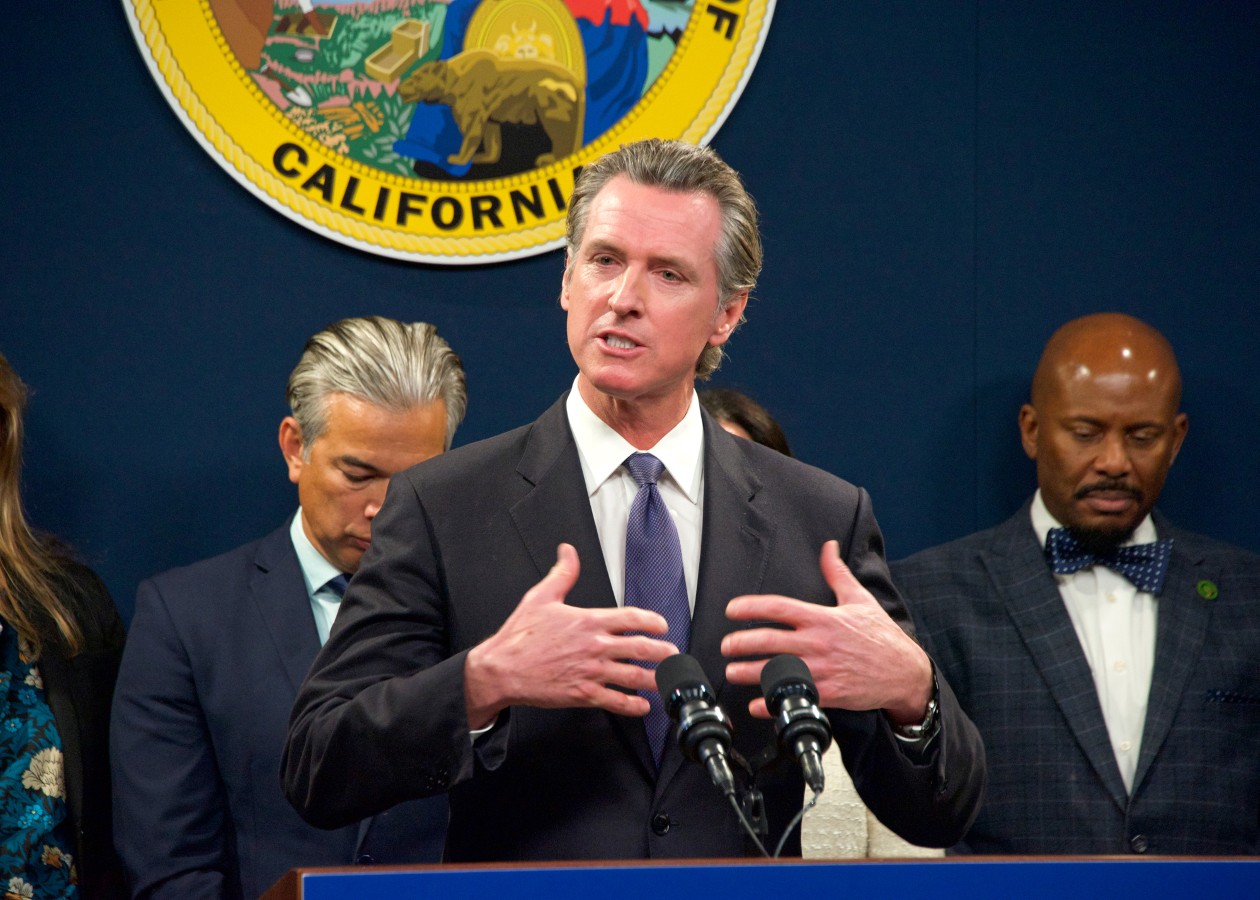
Governor Gavin Newsom has largely resisted calls to suspend the gas tax, instead redirecting public attention toward the record profits of large oil corporations. Newsom has consistently argued that the industry is responsible for the price spikes, famously stating, “They’re ripping you off! Their record profits are coming at your expense.” Rather than tax cuts, the Governor has advocated for increased transparency, refinery inventory requirements, and a “price gouging penalty” to hold oil companies accountable.
“Here in California, because we rely so much on foreign oil, we put ourselves in this position,” Strickland said. “Because of anti-business policies, we just lost Phillips 66 and Valero’s shutting down. Now my bill is the only thing we really have right now to give immediate relief to hardworking California families.”
Prices “are higher in California because of taxes and compliance costs, but also because state policies have driven refineries and crude production out, said Jim Stanley, a spokesman for the Western States Petroleum Association, in a written statement.
The role of unique “boutique” fuel blends in California’s energy isolation
California’s high prices are further exacerbated by its requirement for special “boutique” fuel blends designed to reduce smog. These blends, mandated by CARB, are more expensive to produce and are only manufactured by a handful of refineries within the state. Because these specific blends are not used in other states, California cannot easily import fuel during supply shortages. This isolation means that any refinery maintenance or technical issue causes prices to spike far more dramatically than in the rest of the country.
Los Angeles Mayor Antonio Villaraigosa is pushing for a freeze on several state greenhouse-gas regulations, labeling them “failed policies” that drive up costs. He specifically targets refinery emissions limits and carbon fuel standards, arguing they trigger refinery closures. According to state data, these combined mandates tack on approximately 50 cents to the price of every gallon.
James Blair and political critics point to regulatory failure

James Blair, White House Deputy Chief of Staff and various commentators, have pointed to these regulatory hurdles as the primary driver of the state’s energy crisis. They contend that California’s “green” policies and high taxes have transformed energy into a luxury good. Blair and others argue that the state’s narrative of “price gouging” is a distraction from the fact that California’s own laws make it the most expensive place in the nation to produce and sell fuel.
The impact of high fuel costs extends far beyond the gas station, increasing the cost of goods and services across the board. For San Jose’s small business community, the “California Premium” results in higher delivery fees and operational costs. Mayor Mahan has emphasized that the cost of doing nothing is a slower local economy. He continues to push state leaders to recognize that for many families, the choice between gas and groceries is becoming a daily reality.
The future of the gas tax debate as public outrage grows
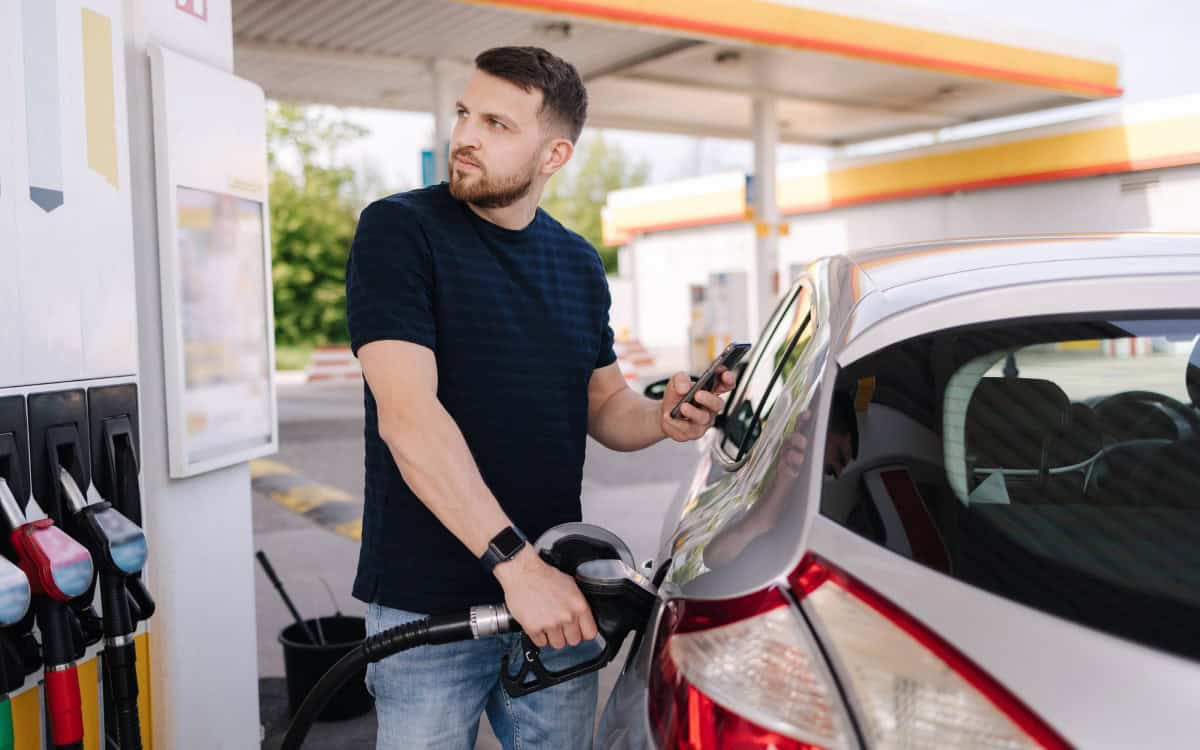
As the gap between California and the rest of the U.S. persists, public outrage continues to grow. The failure of the recent legislative push to slash prices by $1.15 has left many residents feeling that the state government is out of touch with their financial struggles. While Sacramento remains focused on long-term climate goals and infrastructure, local leaders like Mayor Mahan warn that without immediate tax relief, the “man-made disaster” of unaffordability will continue to drive residents and businesses out of the state.
Democratic figures like Antonio Villaraigosa and Matt Mahan are pivoting toward the gas price crisis, attempting to reclaim the “cost of living” narrative. While they are framing this as a fresh priority for the party, their Republican rivals have already spent months hammering home the exact same message.
Both Villaraigosa and Mahan currently trail in the polls, and their centrist platforms closely mirror the strategies of the leading Republican contenders. Republican Steve Hilton has pledged to bring gas down to $3 a gallon by slashing the state gas tax in half and scrapping climate regulations, while Chad Bianco has proposed a total repeal of the tax. While all four candidates agree on boosting local drilling and protecting refinery operations, the front-running Democrats; Katie Porter, Tom Steyer, and Eric Swalwell have yet to release specific plans for lowering fuel costs.
Like Financial Freedom Countdown content? Be sure to follow us!
11 reasons you should claim Social Security early

Deciding when to claim Social Security is often about maximizing your benefit. Financial planners usually advise delaying your claim for as long as possible to secure the highest monthly payment. Your benefit is based on your lifetime earnings, with a full payout available at your full retirement age (FRA), which is currently between 66 and 67 depending on your birth year. Claiming before FRA results in a permanent reduction in your monthly benefit, while waiting beyond FRA leads to a permanent increase. However, the decision isn’t solely about maximizing the monthly check. Personal factors such as health, family circumstances, and financial needs can play a significant role in determining the right time to claim.
11 Reasons You Should Claim Social Security Early
Did you find this article helpful? We’d love to hear your thoughts! Leave a comment with the box on the left-hand side of the screen and share your thoughts.
Also, do you want to stay up-to-date on our latest content?
1. Follow us by clicking the [+ Follow] button above,
2. Give the article a Thumbs Up on the top-left side of the screen.
3. And lastly, if you think this information would benefit your friends and family, don’t hesitate to share it with them!

John Dealbreuin came from a third world country to the US with only $1,000 not knowing anyone; guided by an immigrant dream. In 12 years, he achieved his retirement number.
He started Financial Freedom Countdown to help everyone think differently about their financial challenges and live their best lives. John resides in the San Francisco Bay Area enjoying nature trails and weight training.
Here are his recommended tools
Personal Capital: This is a free tool John uses to track his net worth on a regular basis and as a retirement planner. It also alerts him wrt hidden fees and has a budget tracker included.
Platforms like Yieldstreet provide investment options in art, legal, real estate, structured notes, venture capital, etc. They also have fixed-income portfolios spread across multiple asset classes with a single investment with low minimums of $10,000.
