


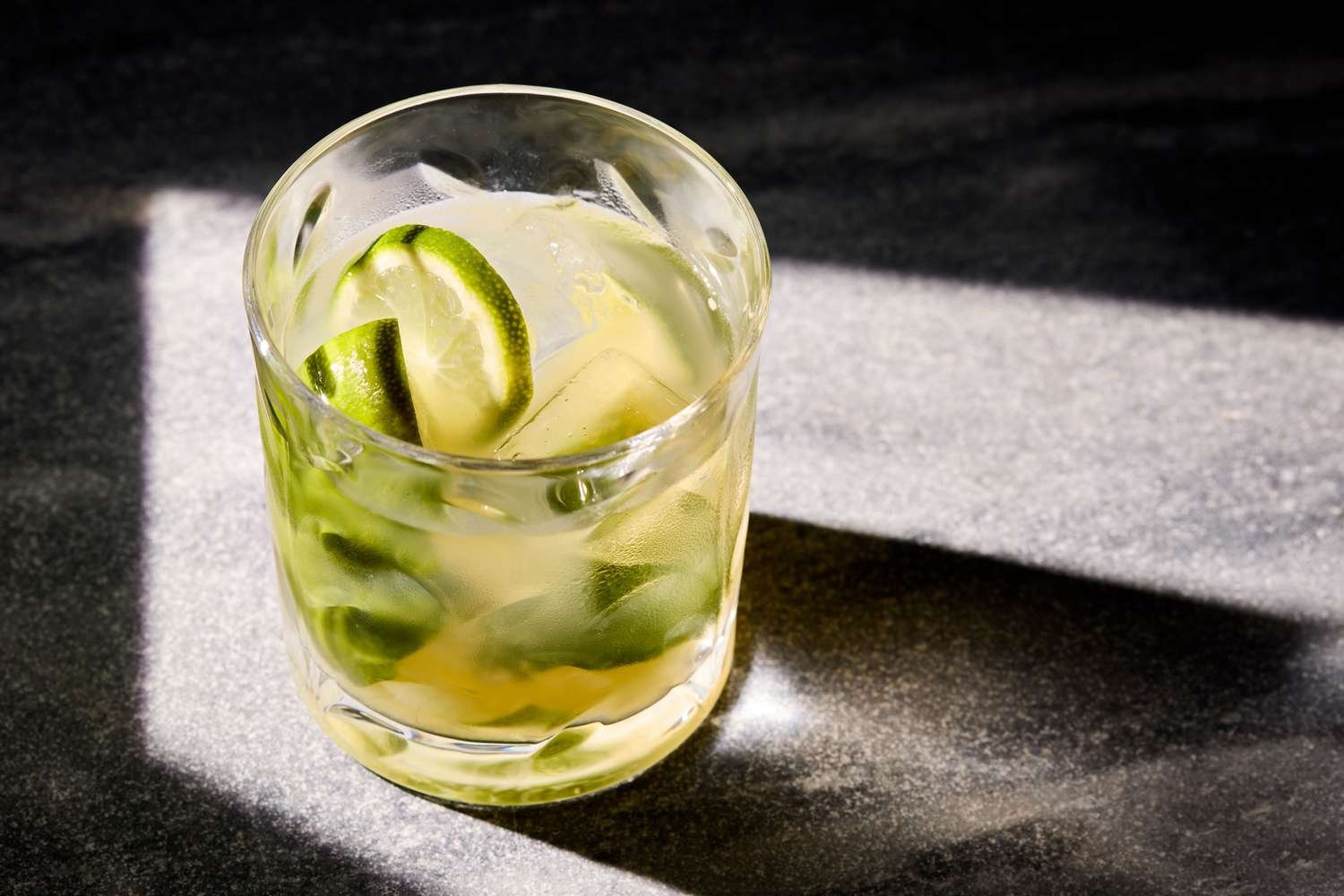
The quintessential American cocktail? That’s up for debate. In Brazil, the mixed drink of choice is long established: a mixture of cachaça, muddled lime, ice, and sugar known as the Caipirinha. With the curiosity-inducing sugarcane spirit cachaça as its base, the Caipirinha’s recipe is simple and delightful. It’s an example that, sometimes, less is more.
While the end result is colorful (literally, as muddled fruit rests within the glass upon serving), the spirit used to make the Caipirinha is worthy of deeper reflection.
The Caipirinha is a refreshing and popular way to enjoy the spirit, especially in the heat. However, cachaça can be sipped neat, with various aged expressions taking on an amber hue.
What is cachaça
Cachaça, thought by many as the national spirit of Brazil, is the backbone of the Caipirinha. It was first distilled from sugarcane after the Portuguese brought the crop to the country in the 1500s. It was eventually distilled at sugar plantations and later, through local and regional producers.
The spirit lives on today, as about 800 million liters of cachaça are produced in Brazil each year, according to the Brazilian Federation of Agriculture and Livestock.
“Cachaça is easy to fall in love with,” says Mari Mesquita, a São Paulo-based bartender, barista, and spirits expert. She’s also part of the team at Cachacier, a cachaça collecting and education group.
The spirit can be at times earthy and robust, or floral and light. And while cachaça shares some commonalities with rum (namely, sugarcane), it must be made in Brazil and distilled from raw sugarcane, unlike rum’s use of byproducts like molasses.
Like other distilled spirits, the aging process (or lack thereof) and the diversity of wooden casks used across Brazil impact the end product, but it must be bottled at no less than 38% alcohol by volume (ABV). Non-aged cachaça is “more floral, more open and less oaky,” says Mesquita, which imparts a stronger flavor and the characteristic “cachaça taste” of grassy, fresh sugarcane.
Mesquita developed a love for the spirit while she explored Brazil’s many coffee-producing regions. Just like coffee, terroir has a big impact on cachaça.
gabrielaer / Getty Images
Why the Caipirinha Works
The Caipirinha unifies Brazilians. It can be found everywhere from high-end cocktail bars to small neighborhood watering holes, says Mesquita. While primarily made with lime, Caipirinhas can be made from nearly every available fruit in Brazil. To order a Caipirinha in the country is akin to a ‘choose-your-own’ adventure.
If the combination of spirit, citrus, and sugar seems familiar, that’s because the Caipirinha is based on the same sour formula as cocktails like the Daiquiri and Whiskey Sour. The Caipirinha presents a looser, simplified version of a sour, with all of the ingredients muddled and mixed in the serving glass.
“A thing about the Caipirinha is that everyone can make it,” says Mesquita. She says that layers of complexity can be added through the use of more sugar or ice. Mesquita also says it’s important to make a Caipirinha fresh each time. That means no batching. It’s also important to use non-aged cachaça branca, or cachaça plata in a Caipirinha.
Be sure to make your drink in a glass with a heavy base, like a double rocks glass, or a pint glass for larger servings.
Mesquita recommends using a base of similarly sized pieces of lime wedge with the peel included, but no seeds. The popular Brazilian tropical fruit caju is also an option, but it could be harder to find in some places.
By muddling the lime and sugar in the glass (with the lime resting at the bottom as the drink is served), “you’re trying to squeeze the oil from the peel of the fruit,” says Mesquita. The sugar should mix with the oils and juice and begin to dissolve.
