


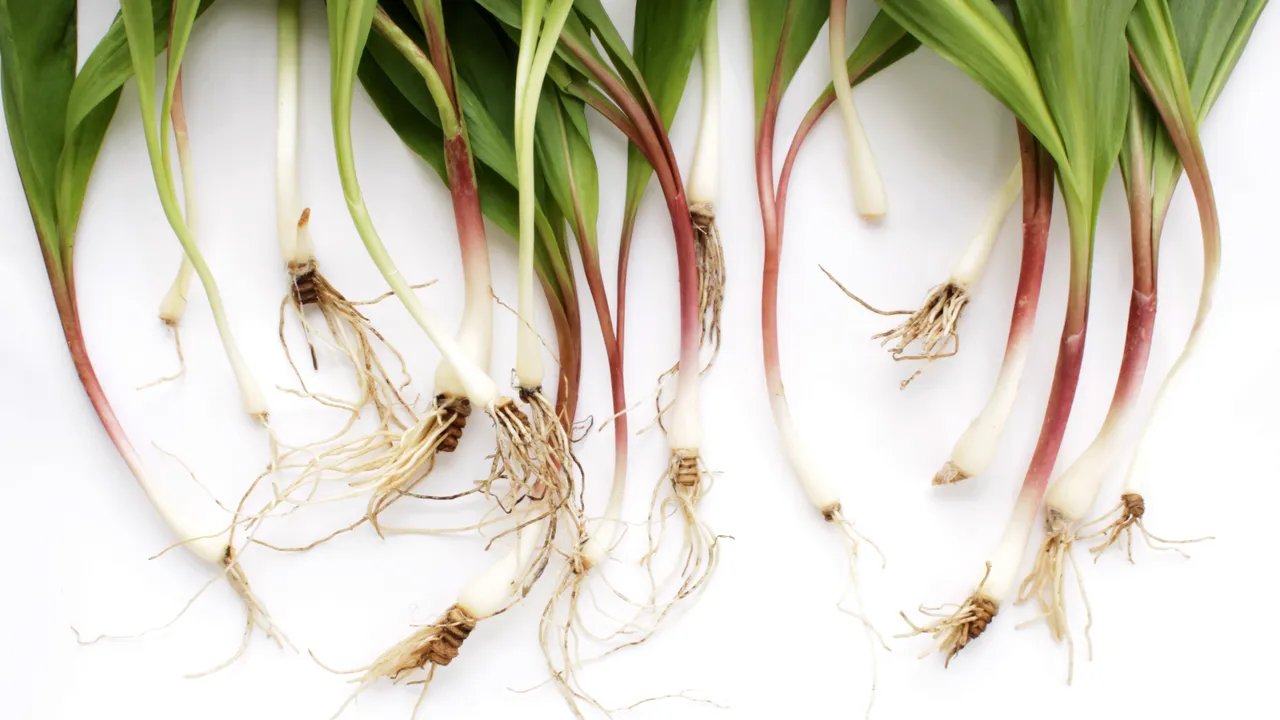
Each spring, otherwise reasonable home cooks lose all inhibitions at the first sight of ramps at the farmers market. Their season is brief, their flavor is punchy, and their reputation precedes them. If you know, you know—and if you don’t, you’re about to.
What are ramps?
Ramps, also called wild leeks or Allium tricoccum, are a type of wild allium (in the same family as chives, garlic, leeks, scallions, and shallots) that grows in eastern North America. They look a bit like scallions, with small white bulbs and stringy roots, but their broad, tender green leaves set them apart. The plant’s name is derived from colloquial American English—in Southern Appalachia, it’s the word for “spring onion” or “wild leek.”
They’re beloved for their distinctive flavor. Raw, they’re sharp and assertive; cooked, they mellow into something sweeter and more rounded. Best of all, the entire plant is edible, from the bulb to the leaves. They’re only available for a few weeks each spring, which makes them one of the most sought-after seasonal vegetables.
What do ramps taste like?
Ramps have a bold, garlicky flavor with oniony sweetness. The bulbs are more pungent, while the leaves are slightly milder and more delicate. Raw ramps have a sharp bite with an almost spicy, earthy flavor. When cooked, those flavors turn soft, sweet, and deeply savory. Imagine the earthiness of a melted leek paired with the robust sweetness of cooked garlic with a little extra “what is that flavor?” oomph thrown in for good measure.
Why are people so obsessed with ramps?
Ramps aren’t just an ingredient—they’re a seasonal event, only available for a short window in early spring (typically April through early June). Their blink-and-you’ll-miss-it season, combined with their intensely savory flavor, is what sends some cooks into a frenzy every spring.
Where do ramps grow—and why are they hard to find?
Ramps grow wild in wooded areas along the Appalachian mountain range, from Quebec down through Georgia. Unlike cultivated onions or garlic, they’re not widely farmed and take years to mature.
That slow growth, combined with high demand, has led to concerns about overharvesting. If you’re buying ramps, look for vendors who source them responsibly—or harvest only the leaves if you’re foraging yourself.
How to shop for ramps
Their exclusivity means that ramps can be costly, especially compared to their humble cousins. Thanks to their short season and labor-intensive harvesting, a bunch may go for $20 per pound.
You’re unlikely to find ramps at a typical grocery store. Instead, check your local farmers markets or specialty grocers during peak season.
