


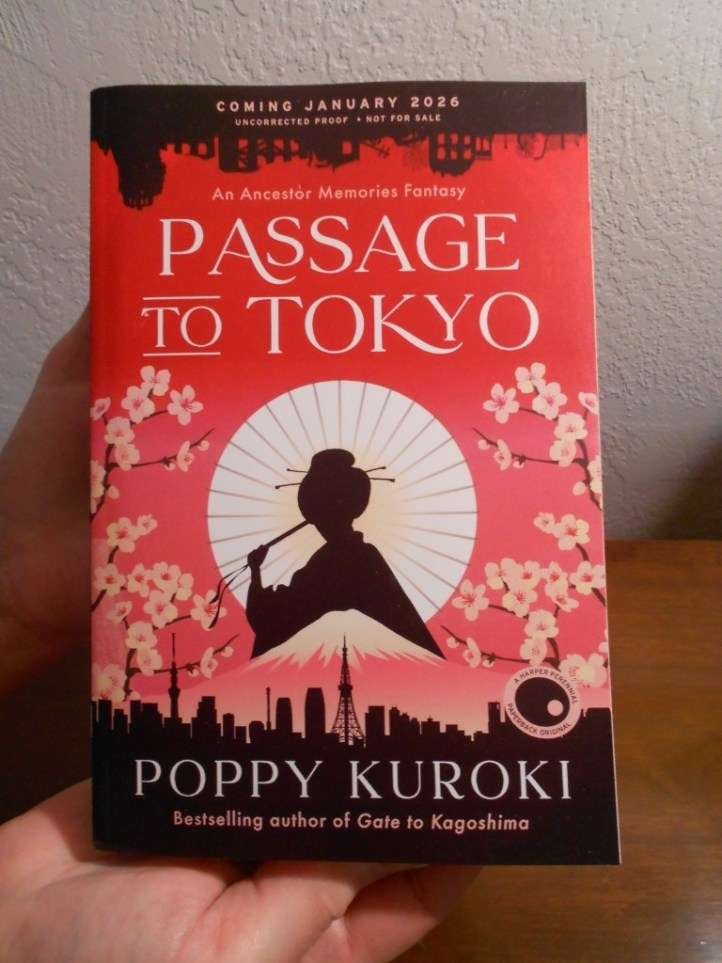
Poppy Kuroki delivers a stunning blend of historical tension, poignant romance, and high-stakes fantasy in Passage to Tokyo, the second installment in her Ancestor Memories series with the first being Gate to Kagoshima that I already reviewed. While this story works beautifully as a standalone, its core—a woman thrown backward in time, facing an impossible ethical dilemma is one that is utterly captivating.
Disclaimer: Some links found on this page might be affiliate links. If you click an affiliate link and make a purchase, we may earn a commission. As an Amazon Associate we earn from qualifying purchases.
We meet Yui Sanada, struggling to hold her small family together in 1995, when her younger brother, Hiro, vanishes into a mysterious passage beneath a samurai statue in Ueno Park. Yui’s desperate chase leads her not only out of the modern world but seventy-two years into the past, landing her squarely in 1923 Tokyo—just weeks before the Great Kanto Earthquake, one of the deadliest natural disasters in Japanese history, is set to strike.
Chosen Family and Radical Acceptance
The novel is profoundly centered on the theme of Chosen Family and Radical Acceptance. Yui’s relationship with Chiyo, the compassionate young woman who helps her, quickly anchors the narrative. This burgeoning queer romance is drawn with tenderness and urgency, offering a crucial sanctuary of warmth and connection amidst the gathering historical storm. It is this emotional investment, namely the family Chiyo offers and the life they begin to build that transforms Yui’s abstract historical knowledge into a devastating personal conflict.
Fate Versus Free Will: The Ethical Dilemma
This leads directly to the book’s central, agonizing theme: Fate versus Free Will. Yui possesses the terrible burden of foreknowledge; she knows the date, the magnitude, and the likely death toll of the coming catastrophe. The narrative skillfully explores the moral weight of this secret. Is she playing God by attempting to intervene, and will her actions cause an even greater historical ripple effect? Or is the preservation of the lives she loves paramount, regardless of the consequences to the timeline? Kuroki doesn’t offer easy answers, forcing Yui (and the reader) to grapple with the impossibility of saving tens of thousands while trying to rescue a few.
The Immersive Backdrop of Taishō-era Tokyo
Furthermore, the backdrop of 1920s Taishō-era Tokyo is rendered with vivid, immersive detail, establishing the city itself as a character grappling with modernization and simmering social tension. The meticulous world-building the author employed emphasizes the theme of Historical Inevitability. The sharp contrast between the city’s vibrant, everyday routines and Yui’s foreknowledge of the seismic tragedy ensures the approaching disaster feels intensely personal and terrifying when the inevitable tremor finally arrives.
My Last Thoughts
Passage to Tokyo by Poppy Kuroki is more than a time-travel narrative; it’s a deeply moving exploration of responsibility, destiny, and the true meaning of family—both the one we are born into and the one we choose. Fans of historical fantasy and stories driven by emotional stakes will find Kuroki’s fine pacing and richly drawn characters impossible to put down. Check this historical romantasy novel out! It is set for release January 27, 2026.
Thanks to HarperCollins for this #gifted book for this review.
