


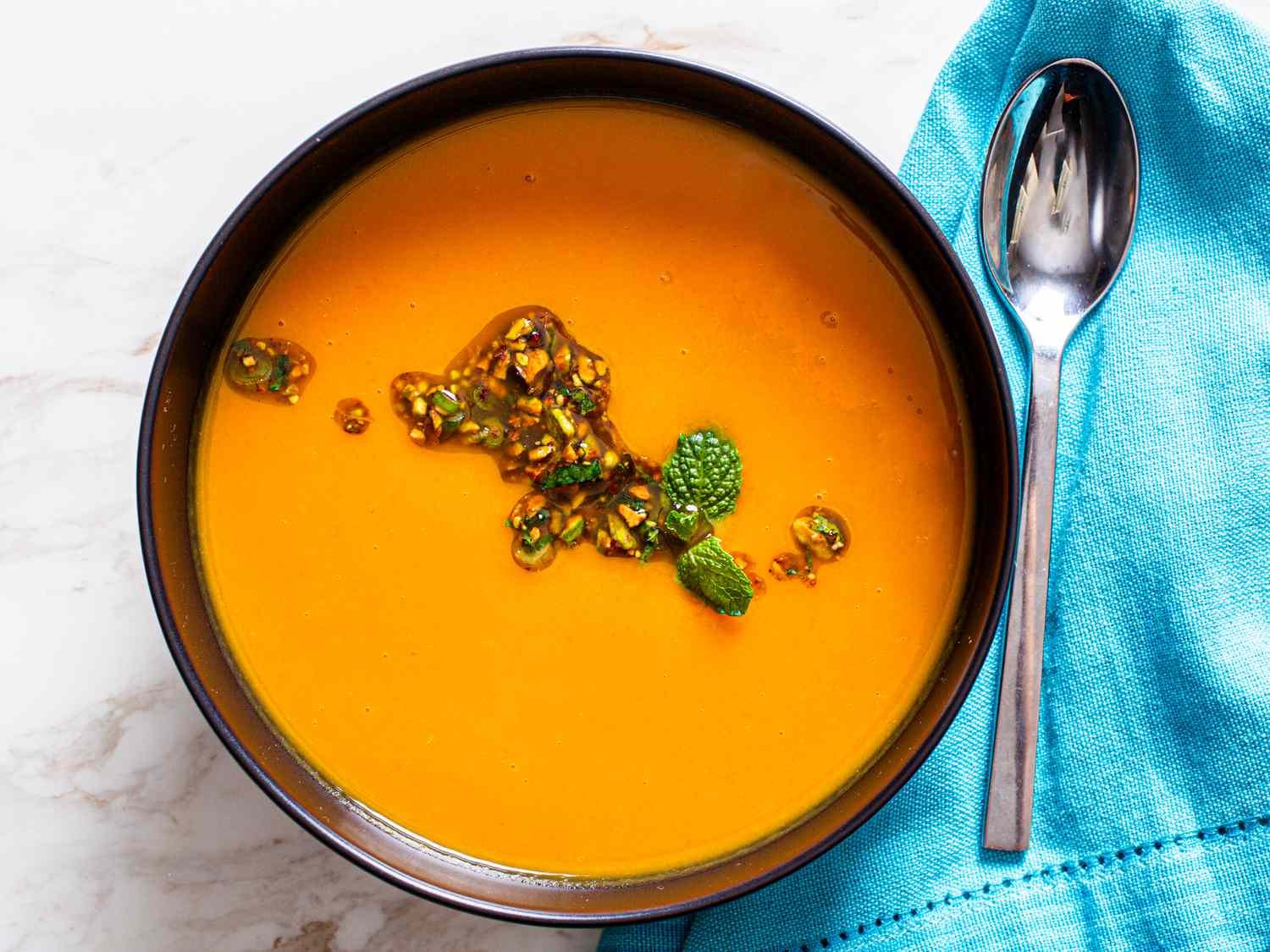
Why It Works
- Roasting the sweet potatoes first at a low temperature enhances their sweetness, then a few minutes at a higher temperature browns them gently.
- A splash of fresh orange juice and zest adds depth and fragrance without being cloying.
After Thanksgiving, the big question is what to do with the leftovers. As someone who works on recipes each day, I have a different challenge: what to do with the leftover raw ingredients that I didn’t end up using in any dishes at all.
One year it was a big bag of sweet potatoes still sitting on my counter after everything else was done. Personally, after a lot of holiday cooking, I’m in the mood for easy, soothing foods—big projects can wait a week or two while I catch my breath. Easy and soothing, for me, often means soup.
And so it was for those sweet potatoes. I started by using Kenji’s low-temperature oven method to roast the sweet potatoes: sweet potatoes convert their starch to sugar best at gentle heat. Crank it too high and you’ll halt their sweetening prematurely. Only after an hour at the low heat did I increase the oven temperature to help brown them a little and deepen their flavor.
While the potatoes cooked, I sweated onion, garlic, and carrot in a soup pot, then added the potatoes. I topped it off with some chicken stock (though homemade vegetable stock works just as well for those hoping to keep things vegetarian) and blended it to a smooth purée. A small splash of orange juice added some subtle extra flavor. The basic technique is outlined in this primer on creamy soups.
I decided to go above and beyond by passing my soup through a fine-mesh strainer. It produces a significantly better texture, but I can’t lie: It’s a minor pain to do. Skip it or do it, as you prefer.
Then, for a garnish, I made a riff on gremolata by crushing pistachios, then stirring in orange zest (from the same orange I had juiced), scallions, mint, and olive oil.
Just like that, my problem was solved.
